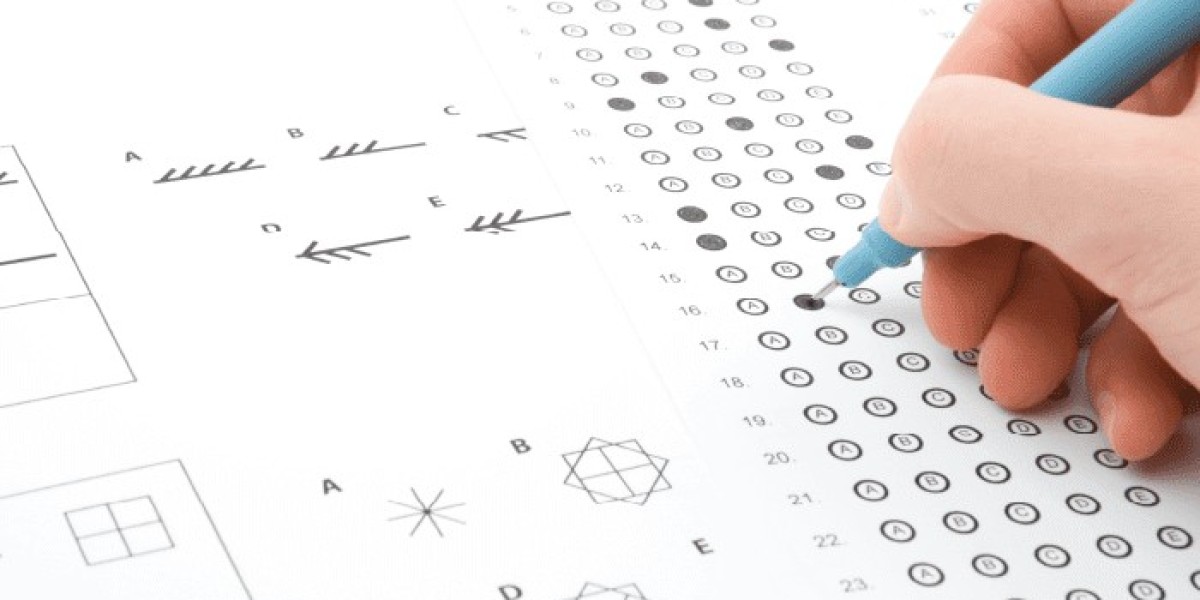

Online IQ tests have become a convenient way for people to explore their cognitive abilities. With an internet connection, you can complete a series of questions involving logic, patterns, numbers, vocabulary, and problem solving and receive an IQ score within minutes. The simplicity of the process makes these tests appealing, but it also raises an important question: how much can you actually trust the number you receive?
When people search for information about how accurate are online IQ tests, they often expect a straightforward answer. In reality, accuracy varies considerably from one test to another. Some online assessments may be thoughtfully designed and provide a useful estimate of certain cognitive abilities. Others are primarily entertainment quizzes with little scientific foundation.
Understanding what an online IQ score means, how these tests are created, and what can affect your performance will help you interpret your result more realistically.
What Is an IQ Score?
An IQ score is intended to summarize performance on specific cognitive tasks relative to an appropriate reference population. Traditional intelligence assessments can examine several areas of cognition, including logical reasoning, working memory, verbal comprehension, visual-spatial reasoning, and processing speed.
IQ tests do not measure every quality associated with intelligence. Creativity, emotional skills, practical judgment, motivation, curiosity, and social abilities are not necessarily represented by a single IQ score.
Professional intelligence assessments are standardized and supported by research. Test developers study how people perform on different questions and establish norms that allow scores to be interpreted in relation to a relevant population.
This background is important because simply putting the words "IQ test" on a website does not make the resulting score scientifically valid.
Why Online IQ Tests Attract So Many People
Online IQ tests are popular largely because they are easy to access. A professional assessment may require an appointment with a qualified psychologist and can involve considerable time and expense. An online test, by contrast, can usually be started immediately.
The questions can also be enjoyable. Pattern puzzles, number sequences, visual challenges, and logical problems give users something interesting to solve. Receiving a score at the end adds a sense of achievement and competition.
For many people, the purpose is simply curiosity. They want to see how they perform or compare their results with friends.
That is perfectly reasonable. The problem arises when a casual online test is treated as though it were a formal psychological assessment.
The Importance of Test Standardization
Standardization is one of the most important characteristics of a reliable cognitive test.
In a standardized assessment, instructions, procedures, timing, scoring, and other elements are carefully controlled. This makes it easier to compare results between people and determine whether differences in performance are meaningful.
Online testing environments are rarely this controlled.
One person may take a test in a quiet room after a good night's sleep. Another may complete it on a smartphone while dealing with notifications, background noise, or interruptions.
Users may also interpret instructions differently, use outside assistance, or take longer than intended. Some may even search for answers while completing the test.
These factors can influence scores independently of cognitive ability. As a result, even a test containing reasonable questions may produce less dependable results when administered under uncontrolled conditions.
Reliability and What It Means
Reliability refers to the consistency of a measurement.
Imagine taking an online IQ test today and receiving a score of 125. If you took the same test again under similar circumstances, you would generally expect your performance to be reasonably similar, although some variation is normal.
If your score repeatedly moves from very low to very high, it may indicate that the assessment is not sufficiently reliable or that external factors are influencing your performance.
Professional intelligence tests are studied extensively to evaluate reliability. Online quizzes often provide little information about whether their scores have been tested for consistency.
Without evidence of reliability, it is difficult to know how much confidence to place in a specific score.
Validity Matters Too
Reliability alone is not enough.
A test also needs validity. In simple terms, validity concerns whether an assessment actually measures what it claims to measure.
An online quiz might consistently measure someone's ability to recognize visual patterns, for example. That does not automatically mean it provides an accurate measure of general intelligence.
A credible IQ assessment should have evidence supporting the relationship between its tasks and the cognitive abilities it claims to measure.
When evaluating an online test, look for information about its development, research background, scoring methods, and validation. If the website provides none of this information, its claims should be treated cautiously.
Your Testing Conditions Can Change the Result
Your mental and physical state can influence how you perform.
If you are tired, concentrating on difficult questions may be harder. Stress and anxiety can affect attention and working memory. Hunger, distractions, and lack of motivation may also reduce performance.
Conversely, someone who is rested, focused, and highly motivated may perform better.
This does not mean an IQ score is meaningless. It means that cognitive performance is not perfectly fixed from one moment to another.
An online test taken late at night after a stressful day may not provide the same result as an assessment completed under comfortable, controlled conditions.
For this reason, it is better to think of a test result as a measurement of performance under particular circumstances rather than an unchanging label.
Practice Can Improve Your Score
Repeated exposure to similar questions can also affect online IQ results.
Many online tests rely on familiar formats. Once you have solved several pattern puzzles or number sequences, you may become better at identifying the strategies needed to solve them.
Your score may therefore improve with practice.
That improvement does not necessarily mean your underlying intelligence has increased. Instead, you may have become more familiar with the types of questions being presented.
This is one reason professional assessments use standardized procedures and carefully selected tasks. They are designed to provide a more meaningful picture of cognitive abilities while accounting for factors that can influence performance.
Why Some Online Scores Look Too Precise
Online IQ websites often provide a very specific number, such as 112, 127, or 139. The precision of these numbers can make them appear authoritative.
However, a precise number does not automatically mean an accurate measurement.
If an assessment has not been properly standardized or validated, the difference between two scores may have little practical meaning. A score of 128 may sound substantially different from 125, but without reliable norms, it is difficult to determine whether the difference represents a genuine difference in ability.
A scientifically responsible assessment should acknowledge measurement uncertainty rather than suggesting that a short quiz can determine someone's exact intelligence.
What Makes an Online IQ Test More Credible?
If you want to take an online IQ test, investigate its credibility before placing too much weight on the result.
Start by looking for information about who developed the assessment. Does the website identify the researchers, psychologists, or organizations involved?
Next, look for evidence of reliability and validity. A credible test should be able to explain how its effectiveness has been evaluated.
You should also look for information about scoring norms. IQ scores depend on comparison with an appropriate population, so the website should explain how its scoring system was established.
Transparency is another positive sign. A trustworthy assessment should explain what its score means and what it does not mean.
Finally, consider whether the test describes itself as a recreational quiz or a serious assessment. These are two very different purposes.
Warning Signs That Should Make You Skeptical
Some online IQ tests make claims that deserve careful scrutiny.
Be cautious when a website promises to reveal your exact IQ in only a few minutes without providing information about scientific validation.
A test with very few questions may be entertaining, but it has limited ability to assess the broad range of cognitive abilities associated with intelligence.
You should also be skeptical if a website provides an unusually high score but offers no explanation of its statistical basis.
Marketing language should not be confused with scientific evidence. A professional-looking website, impressive graphics, or claims about thousands of users do not prove that the test is accurate.
Can an Online IQ Score Still Be Useful?
Yes. An online IQ test can have value when you understand its limitations.
It may give you a general sense of how you perform on particular reasoning tasks. It can also encourage you to explore cognitive skills and challenge yourself with unfamiliar problems.
For casual self-exploration, that may be enough.
However, an online score should not be used to make important conclusions about your intelligence, academic potential, or psychological profile unless the assessment has appropriate scientific support.
The purpose of the test matters. A recreational quiz can be enjoyable without being a scientifically precise measurement.
Online IQ Tests Compared With Professional Assessments
Professional intelligence assessments are designed with a much higher level of scientific and procedural rigor.
A qualified professional can select an appropriate assessment, explain the process, administer the test under standardized conditions, and interpret the results in context.
Professional testing may also provide information about different cognitive domains. Instead of focusing exclusively on one overall score, the results can show patterns of relative strengths and weaknesses.
This can be particularly useful when testing is conducted for educational or psychological purposes.
An online IQ test is generally not an equivalent substitute for this type of assessment.
So, How Accurate Are Online IQ Tests?
The question how accurate are online iq tests ultimately depends on the specific test.
A carefully developed and validated online assessment may provide a useful estimate of certain cognitive abilities. A poorly designed quiz may produce a number that has little scientific meaning.
Even when an online test is reasonably well designed, the result can be influenced by testing conditions, familiarity with the questions, motivation, fatigue, and other factors.
Therefore, the safest approach is to treat an online IQ score as an estimate rather than a definitive statement about your intelligence.
If you receive a score that surprises you, there is no need to immediately conclude that it accurately defines your intellectual ability. One test taken at one particular moment cannot capture the full complexity of human cognition.
Should You Trust Your Online IQ Score?
You can take your online IQ score seriously to the extent that the test itself deserves trust.
If the assessment provides clear information about its development, reliability, validity, scoring norms, and limitations, the result may be worth considering as an approximate indicator.
If the website offers no scientific information and makes exaggerated claims, the result should be treated primarily as entertainment.
Most importantly, avoid allowing a single number to define how you see yourself. A person's abilities cannot be fully summarized by an online score.
Final Thoughts
Online IQ tests can be convenient, engaging, and potentially informative, but their accuracy varies widely. Some are built around legitimate cognitive testing principles, while others are designed primarily as recreational quizzes.
The best way to determine how accurate are online IQ tests is to examine the evidence behind the individual assessment. Look for standardization, reliability, validity, appropriate scoring norms, and transparency about limitations.
If you are simply curious about your reasoning skills, an online test can be a fun experience. If you require a dependable intelligence assessment for an important educational or psychological purpose, a professionally administered standardized test is a better choice.
Ultimately, your online IQ score is only one small piece of information. Whether the number is high, average, or low, it should not be viewed as a complete description of your potential. Intelligence is complex, and your ability to learn, adapt, create, communicate, and solve real-world problems involves far more than a single number on a screen.