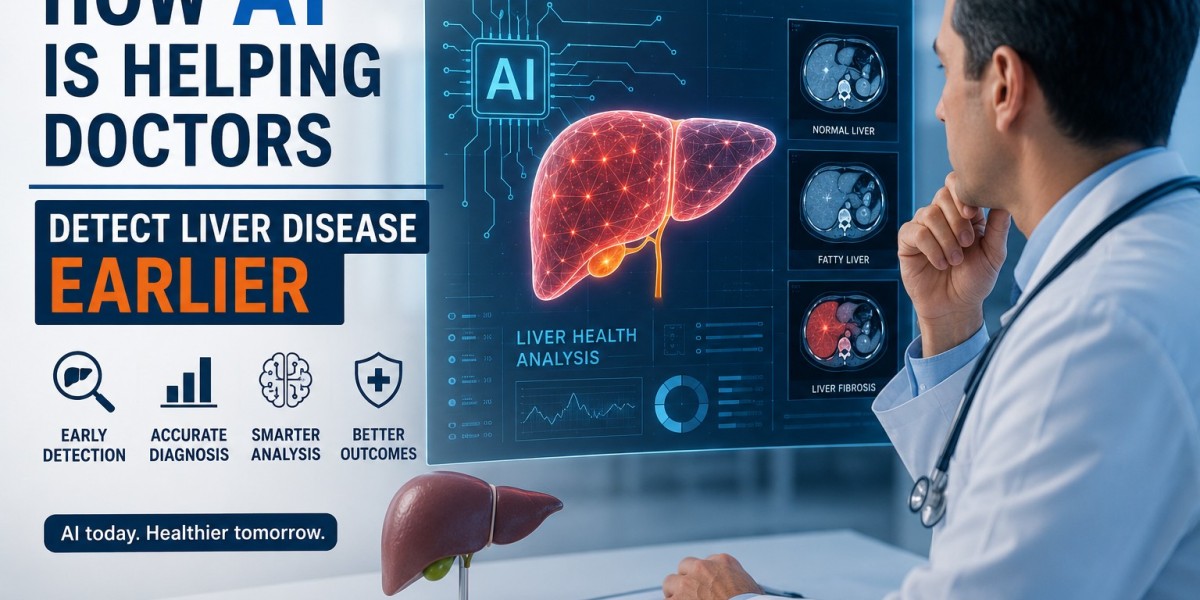

Introduction
Liver disease can develop quietly. Many people do not notice anything unusual until the condition has already progressed. But what if doctors could identify warning signs much earlier? Artificial intelligence (AI) is making this increasingly possible by helping doctors analyze medical images, blood test results, health records, and other information more efficiently.
AI is not replacing doctors. Instead, it works like an extra set of highly trained eyes, helping specialists notice patterns that may otherwise be difficult to detect. For patients, earlier detection can mean earlier treatment, better monitoring, and potentially better outcomes.
Discover how AI helps doctors detect liver disease earlier, improve diagnosis, monitor progression, and support timely treatment while helping patients understand when to consult the best liver transplant surgeon in India.
Discover how AI is helping doctors detect liver disease earlier, improve diagnosis, identify risks, and support timely treatment using smarter medical technology.
What Is Liver Disease?
The liver is one of the body's most important organs. It helps process nutrients, removes harmful substances from the blood, produces proteins, supports digestion, and performs hundreds of other essential functions.
Liver disease refers to conditions that damage or interfere with the normal functioning of the liver. These include fatty liver disease, viral hepatitis, alcohol-related liver disease, autoimmune liver conditions, fibrosis, cirrhosis, and liver cancer.
One of the biggest challenges is that liver disease can remain silent for years. A person may feel healthy while gradual damage is taking place.
Symptoms such as tiredness, abdominal discomfort, yellowing of the skin or eyes, swelling, unexplained weight changes, or changes in appetite may appear later. This is why early testing and appropriate medical evaluation are important, especially for people who have known risk factors.
Why Early Detection Matters
Think of liver disease like a small crack in a wall. If you discover the crack early, repairing it may be relatively straightforward. If you ignore it for years, the damage can spread and become much harder to manage.
The same principle applies to liver health.
When liver disease is detected early, doctors may have more opportunities to address its underlying cause and prevent further damage. Lifestyle changes, medications, monitoring, or treatment of an underlying condition may help depending on the diagnosis.
For advanced liver disease, treatment can become considerably more complex. In some situations, patients may eventually require evaluation for liver transplantation.
Early detection does not guarantee that disease progression will stop, but it can give doctors valuable time to make informed treatment decisions.
What Is Artificial Intelligence in Healthcare?
Artificial intelligence is a technology that allows computer systems to identify patterns and make predictions based on large amounts of information.
In healthcare, AI can be trained using medical images, laboratory results, patient records, and other forms of health information. Once properly developed and validated, an AI system can assist doctors by highlighting patterns that deserve closer attention.
Imagine giving a doctor a powerful magnifying glass. The doctor still decides what the finding means, but the tool may make subtle details easier to notice.
That is one way to understand the role of AI in modern medicine.
AI can process information rapidly, which may be particularly useful when doctors have to review large numbers of scans or test results.
How AI Helps Analyze Liver Scans
Medical imaging is an important part of diagnosing and monitoring liver conditions. Ultrasound, CT scans, MRI scans, and other imaging techniques can provide valuable information about the liver.
AI can analyze these images and identify patterns associated with abnormalities.
For example, AI-based imaging systems may help doctors assess:
- Changes in liver size
- Fat accumulation
- Abnormal tissue patterns
- Possible tumors or lesions
- Signs associated with fibrosis
- Changes that may require additional testing
AI can also help segment the liver from surrounding organs and tissues. This may allow doctors to measure specific areas more consistently.
Importantly, AI findings still need professional interpretation. An unusual image does not automatically mean that a person has liver disease. Doctors consider the patient's symptoms, history, laboratory results, imaging findings, and other clinical information before reaching a diagnosis.
AI and Blood Test Analysis
Blood tests are commonly used to assess liver health. Tests may measure substances such as liver enzymes, bilirubin, albumin, and other markers.
Traditionally, doctors review these results alongside the patient's medical history and other investigations. AI can potentially analyze combinations of multiple results and identify patterns associated with certain liver conditions.
This is important because a single abnormal result may not tell the whole story.
For example, a doctor may need to consider several measurements together rather than focusing on one number. AI can help identify relationships among large sets of data that may be difficult to evaluate manually.
However, AI should be viewed as a supporting tool rather than a standalone diagnostic method.
Detecting Fatty Liver With AI
Fatty liver disease has become a major concern worldwide. It can be associated with factors such as obesity, insulin resistance, diabetes, metabolic problems, and certain lifestyle patterns.
Many people with fatty liver have few or no symptoms.
AI may help improve the identification and assessment of fatty liver by analyzing medical images and combining imaging information with clinical data.
Some AI systems are also being developed to estimate the severity of liver fat and identify patients who may need further evaluation.
This could be particularly valuable because early fatty liver disease may not cause obvious symptoms.
Finding the condition early gives patients an opportunity to discuss lifestyle changes, risk factors, monitoring, and treatment options with their healthcare team.
Identifying Liver Fibrosis and Cirrhosis
Fibrosis occurs when repeated or long-term liver injury causes scar tissue to develop. If significant fibrosis progresses, it can eventually lead to cirrhosis.
Cirrhosis represents advanced scarring of the liver and can interfere with normal liver function.
AI may assist doctors in identifying patterns associated with fibrosis and cirrhosis through imaging and clinical information. This could support earlier risk assessment and help doctors decide which patients need additional investigations.
In the future, AI may become increasingly useful for tracking how liver disease changes over time.
Monitoring progression is important because two people with the same underlying liver condition may have very different disease trajectories.
AI for Liver Cancer Detection
Liver cancer is another area where early identification can be extremely important.
AI-based systems can analyze medical images and potentially highlight suspicious areas that warrant closer examination. Some systems are designed to recognize subtle patterns that may be difficult to distinguish during routine image review.
AI may also assist with measuring tumors and comparing scans over time.
For patients with chronic liver disease, regular monitoring may already be part of their medical care. AI could potentially support doctors by making these assessments more efficient.
Still, AI cannot determine by itself whether a suspicious lesion is cancer. Further imaging, laboratory testing, biopsy, or other specialist assessment may be required depending on the situation.
Predicting Liver Disease Progression
One of the most promising uses of AI is not simply identifying disease but estimating what could happen next.
Researchers are developing systems that use combinations of patient information to estimate the risk of complications or disease progression.
For example, AI models may examine factors such as:
- Age
- Medical history
- Blood test results
- Imaging findings
- Existing liver conditions
- Metabolic health
- Previous treatments
By analyzing many variables together, AI may help doctors identify patients who need closer monitoring.
This could eventually support more personalized care, where treatment and follow-up are tailored to an individual's risk rather than relying only on broad categories.
How AI Supports Doctors in Making Decisions
AI works best when it supports clinical expertise.
A doctor may use AI-generated information as one part of a larger decision-making process. For example, an AI system could flag an unusual scan, after which a specialist reviews the image and decides whether additional testing is necessary.
This creates a human-plus-AI approach.
The technology handles large amounts of information and pattern recognition, while the doctor provides medical judgment, context, communication, and responsibility for patient care.
This distinction matters. Medical decisions involve more than recognizing patterns. Doctors must consider symptoms, personal circumstances, treatment risks, patient preferences, and many other factors.
Benefits of AI-Based Liver Disease Detection
The potential benefits of AI in liver healthcare are significant.
1. Earlier Identification
AI may help identify subtle abnormalities before they become obvious clinically.
2. Faster Data Analysis
Computers can process large datasets much faster than humans can manually review them.
3. Improved Consistency
AI tools may provide standardized measurements, potentially reducing differences between assessments.
4. Better Risk Assessment
Combining multiple types of patient data may help doctors identify people at higher risk of complications.
5. Support for Personalized Care
AI could help physicians understand individual risk patterns and develop more targeted monitoring strategies.
6. Assistance With Follow-Up
Comparing scans and test results over time may become easier with AI-assisted systems.
These benefits could make AI an increasingly useful part of liver disease management.
Can AI Replace a Liver Specialist?
No.
AI can analyze information, recognize patterns, and provide recommendations, but it does not replace the knowledge and judgment of a qualified doctor.
A liver specialist understands the patient's complete clinical picture. They can ask questions, perform examinations, order appropriate tests, explain possible diagnoses, discuss treatment choices, and respond to complications.
For complex conditions, especially advanced liver disease, specialist care is particularly important.
Patients considering advanced treatments such as liver transplantation should receive individualized evaluation from an experienced transplant team. If transplantation becomes a possibility, consulting the best liver transplant surgeon in India can help patients understand whether transplant evaluation is appropriate and what the next steps may involve.
Limitations and Challenges of AI
Although AI has enormous potential, it is not perfect.
The quality of an AI system depends partly on the quality and diversity of the data used to develop and validate it. If a system has not been adequately tested across different populations, hospitals, scanners, or clinical settings, its performance may vary.
There are also concerns involving privacy, data security, bias, false-positive results, and false-negative results.
A false positive could cause unnecessary anxiety or additional testing. A false negative could potentially delay further investigation.
Another challenge is explaining why an AI system reached a particular prediction. Doctors and patients need to understand how technology is influencing healthcare decisions.
For these reasons, AI should complement medical expertise rather than operate without appropriate clinical oversight.
What the Future May Look Like
The role of AI in liver medicine is likely to expand as researchers develop better algorithms and more reliable datasets.
Future systems may combine imaging, laboratory results, genetics, medical history, and other information to provide a more comprehensive assessment of liver health.
AI could potentially help doctors identify high-risk patients earlier, monitor disease progression more closely, and select appropriate patients for specific investigations or treatments.
Another exciting possibility is the development of tools that can assist doctors in rural or underserved areas where access to specialist expertise may be limited.
However, technological progress must be accompanied by proper clinical validation, responsible data use, and strong medical oversight.
The goal should not be to replace doctors. The goal should be to help doctors make better-informed decisions for their patients.
When Should You See a Liver Specialist?
You do not need to wait for severe symptoms before discussing liver health with a doctor.
Consider seeking medical advice if you have persistent abnormal liver tests, a history of hepatitis, known fatty liver disease, unexplained jaundice, abdominal swelling, unexplained changes in weight or appetite, or other symptoms that concern you.
People with risk factors for liver disease may also benefit from appropriate screening and regular medical follow-up.
If a doctor identifies significant liver damage or advanced disease, specialist evaluation becomes especially important.
Do not rely on an AI tool, online symptom checker, or internet search to diagnose yourself. These resources can provide general information, but diagnosis requires appropriate medical evaluation.
Conclusion
Artificial intelligence is changing how doctors approach liver disease detection. By analyzing scans, laboratory results, and large amounts of medical information, AI may help identify concerning patterns earlier and support more personalized monitoring.
But technology is only one part of the picture. Early testing, regular medical care, healthy lifestyle choices, and expert medical guidance remain essential.
As AI continues to develop, its greatest value may come from helping doctors see more clearly, act sooner, and provide better-informed care to people living with or at risk of liver disease.
Frequently Asked Questions
1. Can AI detect liver disease before symptoms appear?
AI may help identify patterns in medical images, laboratory results, or other health data that could indicate liver abnormalities before noticeable symptoms develop. However, AI is a supporting tool and does not independently diagnose disease.
2. Can AI detect fatty liver disease?
Yes, AI-based technologies are being developed to analyze medical images and other information associated with fatty liver disease. A doctor must interpret the results and determine whether additional testing is appropriate.
3. Can AI identify liver cancer?
AI can assist doctors by analyzing medical images and highlighting suspicious areas. However, a suspicious finding does not automatically confirm cancer. Additional medical evaluation may be necessary.
4. Will AI replace liver specialists?
No. AI can support doctors by processing information and recognizing patterns, but specialists provide clinical judgment, diagnosis, treatment planning, and patient-centered care.
5. When should I consult a liver specialist?
You should discuss your concerns with a doctor if you have persistent abnormal liver tests, known liver disease, risk factors, unexplained jaundice, abdominal swelling, or other concerning symptoms. Advanced or complicated liver conditions may require specialist evaluation.
For anyone concerned about liver health, consulting an experienced specialist remains essential. Patients who require advanced treatment can seek guidance from the best liver transplant surgeon in India for appropriate evaluation and treatment planning.