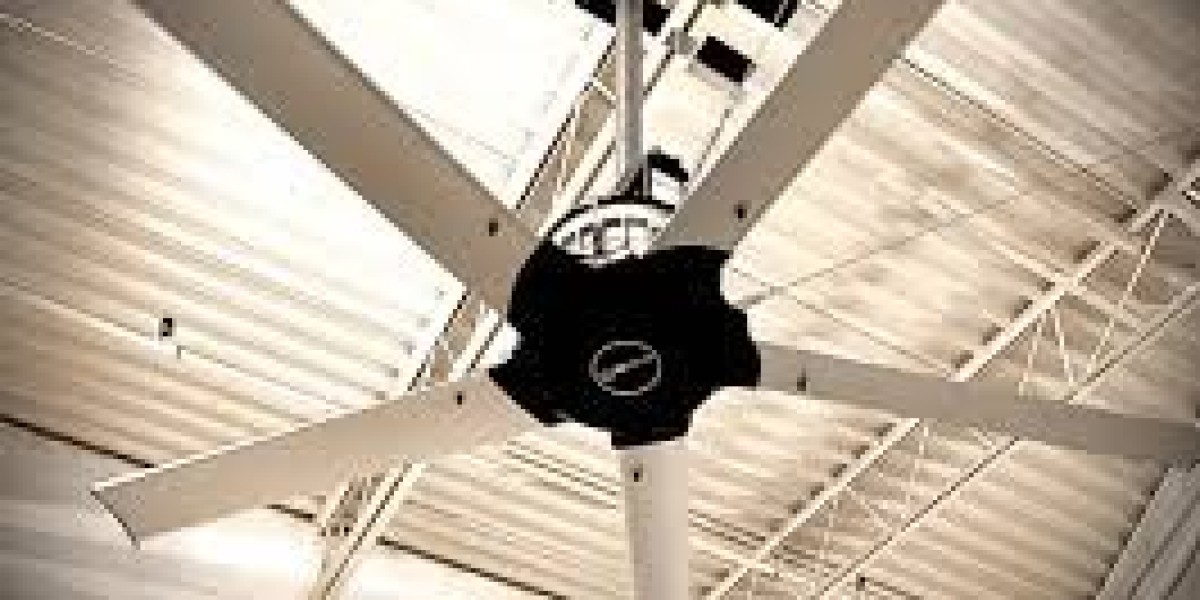

Maintaining proper airflow in a warehouse can be challenging, particularly when the facility has high ceilings, large storage areas, heavy equipment, and multiple work zones. Poor air circulation can create hot and cold spots, increase discomfort, and make heating and cooling systems work harder.
High Volume Low Speed (HVLS) fans are designed to move large volumes of air across expansive spaces. Choosing the right HVLS fan for your warehouse requires careful consideration of building size, ceiling height, airflow requirements, fan efficiency, controls, and installation conditions.
Understand Your Warehouse Requirements
Before purchasing an HVLS fan, evaluate the characteristics of your facility.
Consider:
- Warehouse floor area
- Ceiling height
- Storage rack configuration
- Number of employees
- Equipment and machinery
- Loading and unloading areas
- Existing HVAC systems
- Desired airflow coverage
These factors will help determine the appropriate fan size, quantity, and placement.
Consider the Size of Your Warehouse
The size of the warehouse is one of the most important factors when selecting an HVLS fan.
Large warehouses may require multiple fans positioned strategically throughout the building. Instead of simply choosing the largest fan available, consider how airflow needs to move across the entire facility.
A properly planned fan layout can help reduce stagnant areas and provide more consistent air circulation.
Evaluate Ceiling Height
HVLS fans are particularly effective in buildings with high ceilings, but installation height affects performance.
A fan should be installed at an appropriate height to provide effective airflow while maintaining adequate clearance from:
- Roof structures
- Lighting fixtures
- Sprinkler systems
- Storage racks
- Machinery
- Other overhead equipment
Professional assessment can help determine suitable mounting locations.
Determine the Required Airflow
Airflow is commonly measured in Cubic Feet per Minute (CFM). This measurement indicates how much air the fan can move.
However, CFM should not be considered alone. Also evaluate:
- Air velocity
- Coverage area
- Fan diameter
- Operating speed
- Building layout
The goal is to achieve effective air circulation throughout occupied areas rather than simply maximizing airflow.
Choose the Appropriate Fan Diameter
HVLS fans are available in different sizes. Larger fans generally cover greater areas, but the appropriate diameter depends on the warehouse's dimensions and design.
Consider:
- Total floor area
- Ceiling height
- Fan mounting position
- Obstructions
- Required airflow
A professional supplier can help determine whether one large fan or several smaller units will provide the best coverage.
Look for Energy-Efficient Motors
Warehouse fans may operate for many hours each day, making motor efficiency an important consideration.
Look for features such as:
- Direct-drive motors
- High-efficiency motors
- Electronically commutated (EC) motors
- Variable-speed operation
An efficient motor can provide the required airflow while helping control electricity consumption.
Consider Variable-Speed Controls
Warehouse conditions can change throughout the day and across seasons.
Variable-speed controls allow facility managers to adjust airflow according to temperature and operational requirements.
For example, fans can operate at higher speeds during hot conditions and lower speeds when only gentle circulation is required.
Advanced systems may also integrate with temperature sensors or building management systems.
Think About Year-Round Performance
HVLS fans can support both cooling and heating efficiency.
Summer Airflow
During warmer conditions, increased air movement can improve perceived comfort by helping heat dissipate from workers' bodies.
Fans can also help distribute conditioned air more effectively throughout the warehouse.
Winter Destratification
During winter, warm air naturally rises toward the ceiling. HVLS fans can help circulate this warm air back toward occupied areas.
This process, called destratification, can help reduce temperature differences and support more efficient heating.
Consider Your Warehouse Layout
Fan placement is essential for achieving effective coverage.
Consider the location of:
- Storage racks
- Workstations
- Loading docks
- Machinery
- Aisles
- HVAC outlets
- Employee areas
Obstructions can interfere with airflow, so fan placement should be carefully planned.
Choose Durable Construction
Warehouses can expose fans to dust, moisture, temperature changes, and continuous operation.
Look for industrial fans with:
- Durable blades
- Heavy-duty motors
- Corrosion-resistant finishes
- Reliable mounting systems
- Industrial-grade components
Choosing equipment appropriate for the warehouse environment can improve reliability and service life.
Prioritize Safety
Because HVLS fans are mounted overhead, safety is critical.
Important safety features may include:
- Safety cables
- Secure mounting systems
- Blade retention mechanisms
- Motor protection
- Thermal overload protection
- Emergency shutdown options
Installation should always follow the manufacturer's requirements and applicable safety standards.
Evaluate Noise Levels
Although HVLS fans generally operate at relatively low speeds, noise may still matter in certain warehouse environments.
If employees work near the fans for extended periods, consider models designed for quiet operation and review available manufacturer specifications.
Consider Installation Requirements
Before purchasing, determine whether your warehouse has suitable structural support.
Installation may require consideration of:
- Ceiling structure
- Mounting points
- Electrical supply
- Fan clearance
- Lighting
- Sprinklers
- Racking systems
Professional installation can help ensure that the fan is safely mounted and positioned for optimal airflow.
Check Maintenance Requirements
Regular maintenance helps maintain airflow performance and extend the life of your HVLS fan.
Routine maintenance may include:
- Cleaning fan blades
- Inspecting mounting hardware
- Checking safety cables
- Inspecting electrical connections
- Monitoring motor performance
- Checking control systems
- Looking for unusual vibration or noise
A preventive maintenance schedule can help identify problems before they result in unexpected downtime.
Compare Total Cost of Ownership
The cheapest fan is not necessarily the most economical choice.
When comparing HVLS fans, consider:
- Initial purchase price
- Installation costs
- Energy consumption
- Maintenance requirements
- Replacement parts
- Warranty coverage
- Expected operating life
A more efficient and durable fan may provide greater long-term value.
Common Mistakes to Avoid
Avoid these common HVLS fan purchasing mistakes:
- Choosing a fan based only on price
- Selecting the wrong fan diameter
- Ignoring ceiling height
- Underestimating airflow requirements
- Failing to account for warehouse obstacles
- Overlooking motor efficiency
- Skipping professional installation
- Neglecting maintenance
Proper planning can help prevent these issues and improve the overall performance of the fan system.
Final Thoughts
Choosing the best hvls fans for your warehouse requires careful evaluation of the building's size, ceiling height, layout, airflow requirements, operating environment, and energy goals.
A properly selected HVLS fan can improve air circulation, reduce stagnant areas, enhance employee comfort, and support existing heating and cooling systems. By considering fan size, motor efficiency, controls, installation requirements, safety, and maintenance, warehouse operators can choose an airflow solution that delivers reliable performance and long-term value.