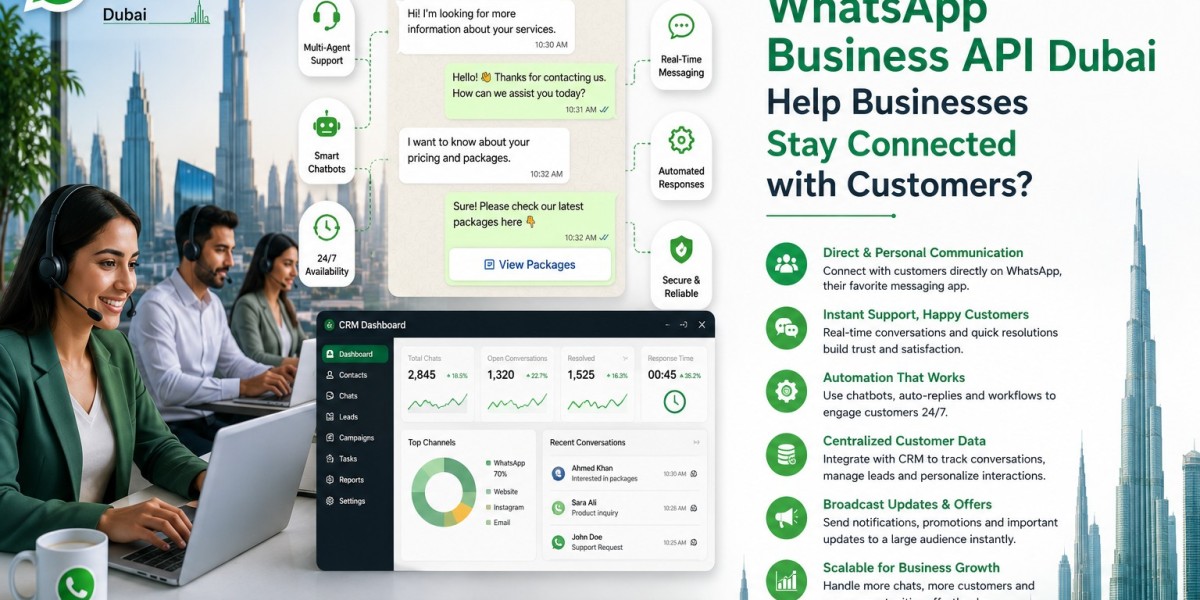

Dubai has grown into one of the most competitive commercial hubs in the world, with businesses across retail, hospitality, real estate, healthcare, and finance racing to deliver faster, more personal customer experiences. In this environment, communication is no longer a back-office function — it is a frontline differentiator. This is where the WhatsApp Business API Dubai has emerged as a game-changing tool, allowing companies to engage customers on the platform they already use every day, at scale, and with a level of professionalism that matches enterprise expectations.
Unlike the free WhatsApp Business App, which is designed for small teams and limited volumes, the WhatsApp Business API is built for medium and large organizations that need automation, multi-agent support, CRM integration, and analytics. For a market as diverse and fast-paced as Dubai — where customers span dozens of nationalities, languages, and communication preferences — this level of capability is not a luxury; it is quickly becoming a necessity.
Understanding the WhatsApp Business API
The WhatsApp Business API is a messaging infrastructure that allows companies to connect their internal systems — such as CRMs, e-commerce platforms, and support ticketing tools — directly with WhatsApp. Instead of manually replying to messages from a phone, businesses can manage conversations through a centralized dashboard or integrate messaging into their existing software stack.
In Dubai, this API is typically accessed through official WhatsApp Business Solution Providers (BSPs), who offer the technical infrastructure, compliance support, and additional features needed to run WhatsApp communication at an enterprise level. These providers handle account verification, message template approvals, and ongoing platform updates, so businesses can focus on customer engagement rather than technical maintenance.
Why WhatsApp Matters So Much in the UAE Market
High Smartphone and App Penetration
The UAE has one of the highest smartphone penetration rates globally, and WhatsApp remains the dominant messaging app across the population. Whether communicating with a local resident, a tourist, or an international client, businesses can be reasonably confident that WhatsApp is already installed on their customer's phone. This universal reach removes the friction of asking customers to download a new app or learn a new interface.
A Multicultural, Multilingual Customer Base
Dubai's population includes a large expatriate community alongside GCC and international visitors. Customers may prefer communicating in English, Arabic, Hindi, Urdu, Tagalog, or Russian, among many other languages. The WhatsApp Business API supports rich messaging formats and can be integrated with translation tools or multilingual chatbot flows, allowing businesses to serve this diversity without maintaining separate communication channels for each language group.
Expectation of Instant, Personal Service
Customers in Dubai's retail and service sectors often expect near-instant responses, particularly from premium brands, real estate agencies, and hospitality providers. Traditional channels like email or phone calls can feel slow or impersonal by comparison. WhatsApp offers a familiar, conversational tone while still allowing businesses to maintain professionalism through verified business profiles and structured automated responses.
Key Ways WhatsApp Business API Keeps Businesses Connected
Verified Business Profiles Build Trust
One of the first benefits businesses notice is the ability to obtain a verified green tick badge, which confirms the account's authenticity. In a market where phishing and impersonation scams are a genuine concern, this verification reassures customers that they are communicating with a legitimate company, not a fraudulent account. Trust, once established, becomes the foundation for deeper customer relationships.
Automated Yet Personalized Messaging
The API allows businesses to set up automated greeting messages, quick replies, and away messages, ensuring no customer inquiry goes unanswered — even outside business hours. At the same time, businesses can layer in personalization by pulling customer data from a CRM, such as order history or loyalty status, so that even automated messages feel relevant and tailored rather than generic.
Multi-Agent Support for Growing Teams
As businesses scale, a single WhatsApp number often needs to be managed by multiple support agents simultaneously. The API enables this through integration with helpdesk and contact center software, allowing several team members to handle conversations from one number without confusion, duplicate replies, or lost messages. This is particularly valuable for Dubai-based businesses with large customer service or sales teams handling high message volumes daily.
Rich Media for Engaging Conversations
WhatsApp supports images, videos, PDFs, location sharing, and interactive buttons. A real estate company can send property brochures and virtual tour videos directly in chat. A restaurant can share its menu with clickable ordering options. A logistics company can send real-time shipment tracking links. This flexibility turns a simple text thread into a fully functional customer service and sales channel.
Notifications, Reminders, and Updates
Through approved message templates, businesses can send appointment reminders, order confirmations, shipping updates, and payment notifications proactively. For sectors like healthcare, aviation, and logistics — all significant industries in Dubai — these timely updates reduce no-shows, missed payments, and customer confusion, while cutting down the burden on call centers.
Integration with E-Commerce and Payment Systems
Many Dubai-based retailers and online stores integrate the WhatsApp Business API with their e-commerce platforms, enabling customers to browse catalogs, ask questions, and even complete purchases without leaving the chat. Combined with UAE-based payment gateways, this creates a seamless shopping experience that feels natural to customers already comfortable messaging on WhatsApp.
Industry-Specific Applications in Dubai
Retail and E-Commerce
Retailers use WhatsApp to send personalized product recommendations, promotional offers, and abandoned cart reminders, driving repeat purchases and higher customer lifetime value.
Real Estate
Property agencies rely heavily on WhatsApp for lead qualification, sharing listings, scheduling viewings, and following up with prospective buyers — often the fastest-moving channel in a competitive property market.
Hospitality and Tourism
Hotels and tour operators use WhatsApp for booking confirmations, concierge-style guest requests, and post-stay feedback collection, enhancing the guest experience from booking to checkout.
Healthcare
Clinics and hospitals use the API for appointment scheduling, prescription reminders, and general patient communication, all while maintaining professional, verified channels.
Banking and Financial Services
Financial institutions use WhatsApp for secure account notifications, customer support, and service updates, often layered with strict compliance and encryption standards required by UAE regulators.
Compliance and Data Security Considerations
Businesses operating in Dubai must be mindful of UAE data protection regulations and telecommunications rules when deploying customer communication tools. Reputable WhatsApp Business Solution Providers ensure that message templates are pre-approved, data handling aligns with regional compliance requirements, and end-to-end encryption protects sensitive customer information. This gives businesses the confidence to use WhatsApp not just for marketing, but for sensitive transactional communication as well.
Measuring the Impact on Customer Connection
Businesses using the WhatsApp Business API in Dubai often report improvements in several measurable areas: faster average response times, higher customer satisfaction scores, increased conversion rates from chat-based sales, and reduced pressure on traditional call centers. Because WhatsApp conversations are asynchronous, customers can engage with a business at their own convenience, while businesses can manage inquiries more efficiently than with phone-based support alone.
Conclusion
The WhatsApp Business API has become far more than a messaging convenience for companies operating in Dubai — it is a strategic tool for building trust, delivering personalized service, and staying accessible in a market defined by diversity and high customer expectations. By combining verified profiles, automation, multi-agent support, and rich media capabilities, businesses can transform a simple chat app into a powerful engine for customer connection, loyalty, and growth. As Dubai's digital economy continues to expand, companies that embrace this technology early are likely to maintain a meaningful edge in customer experience over those that rely solely on traditional communication channels.