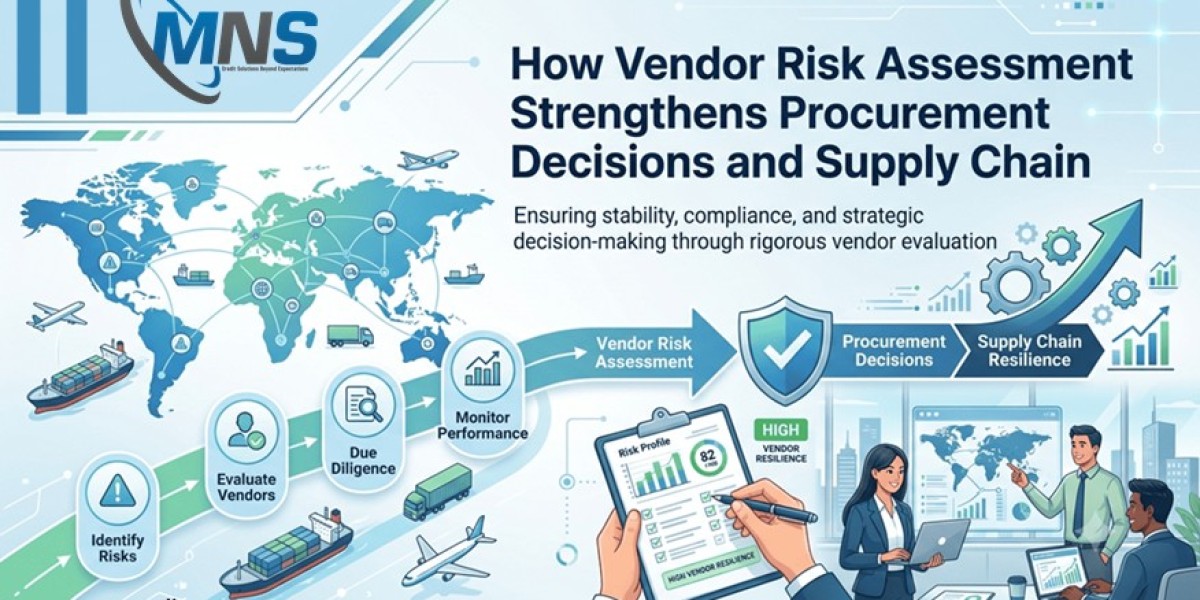

Procurement teams are under constant pressure to move fast — new suppliers need to be onboarded, contracts need to be signed, and supply needs to keep flowing. That pressure is exactly why vendor risk assessment gets skipped or reduced to a formality in so many organizations, and exactly why the ones that skip it eventually pay for it, often at the worst possible moment: mid-project, mid-shipment, or mid-contract. A structured vendor risk assessment process does more than satisfy a compliance checklist. It directly strengthens the quality of procurement decisions and the resilience of the supply chain those decisions depend on.
What Vendor Risk Assessment Actually Evaluates
A proper vendor risk assessment goes well beyond checking whether a supplier can deliver at the quoted price. It evaluates the vendor's legal existence and registration status, financial stability and creditworthiness, compliance history, ownership and management structure, operational capacity, geographic and geopolitical exposure, and reputational standing. Each of these dimensions answers a different question a procurement decision ultimately depends on: can this vendor actually perform, will it still exist in twelve months, and does doing business with it expose the company to legal, financial, or reputational risk it hasn't priced in.
Why This Matters More Than It Used to
Supply chains have grown longer, more specialized, and more interdependent, which means a single unreliable vendor several tiers down can disrupt production or service delivery for everyone above it. At the same time, regulatory expectations around third-party risk have tightened considerably — procurement and compliance teams are now routinely expected to demonstrate that they knew who they were contracting with and what risks that relationship carried, not just after an incident but before the contract was signed. Vendor due diligence involves evaluating the risk exposure associated with current and prospective vendors to ensure reliability, compliance, and financial stability, and that evaluation increasingly needs to be documented, not assumed.
Core Components of a Strong Vendor Risk Framework
● Legal and registration verification — Confirming the vendor is a genuinely registered, active entity, not a shell or a struck-off company still trading under an old name.
● Financial health screening — Reviewing filed financial statements, payment history, and credit indicators to judge whether the vendor has the working capital to sustain the relationship through demand fluctuations.
● Compliance and regulatory standing — Checking for litigation, regulatory action, tax defaults, or sanctions exposure that could disrupt supply or create liability for the buyer.
● Ownership transparency — Understanding who actually controls the vendor, including beneficial ownership, to avoid inadvertent exposure to sanctioned or high-risk individuals.
● Operational and geographic risk — Assessing single-source dependency, facility concentration, and exposure to regions prone to political, logistical, or regulatory disruption.
● Ongoing monitoring — Treating vendor risk as a live status rather than a one-time approval, with periodic re-screening built into the vendor lifecycle.
Embedding Risk Assessment Into the Procurement Workflow
The most effective procurement organizations don't treat vendor risk assessment as a separate compliance step bolted onto sourcing. They build it into the workflow itself: a preliminary screen before a vendor is even shortlisted, a deeper assessment before contract signature, and a lighter periodic re-check throughout the life of the relationship — triggered automatically by events such as a change in ownership, a lapse in filings, or a shift in payment behavior. This tiered approach keeps onboarding fast for low-risk, low-value vendors while ensuring higher-value or higher-risk relationships get the scrutiny they warrant.
From Risk Assessment to Procurement Decision Quality
Better vendor risk data changes the shape of procurement decisions in practical ways. It allows sourcing teams to negotiate terms — payment schedules, penalty clauses, minimum insurance requirements — that reflect the actual risk profile of a vendor rather than a generic template. It supports smarter dual-sourcing decisions, since risk data often reveals which "backup" suppliers carry just as much concentration risk as the primary one. And it gives procurement leadership a defensible basis for vendor approval decisions when they are later questioned by auditors, boards, or regulators.
Building Supply Chain Resilience, Not Just Vendor Compliance
Resilience is what vendor risk assessment ultimately buys a business. A supply chain built on vendors that have been genuinely vetted — legally, financially, and operationally — is far less likely to suffer a sudden, unexplained disruption. When disruption does occur elsewhere in the market, a business with strong vendor risk visibility can react faster, because it already understands which of its suppliers are financially fragile, geographically concentrated, or operationally dependent on a single facility. This turns vendor risk assessment from a defensive compliance exercise into a genuine competitive advantage during periods of market stress.
A Cross-Border Perspective
For organizations sourcing across India and the Middle East, vendor risk assessment needs to account for jurisdiction-specific frameworks — including PMLA and RBI-aligned KYC norms domestically, and CBUAE, DIFC, and ADGM compliance expectations for Gulf-based suppliers, alongside FATF and MENAFATF screening standards. A vendor that clears domestic screening cleanly may still carry cross-border exposure that a purely local assessment would miss, which is why international vendor onboarding benefits from a framework built to handle multiple regulatory regimes rather than one adapted ad hoc.
Common Mistakes That Undermine Vendor Risk Programs
Even organizations that have a vendor risk policy on paper often undercut it in practice. The most common failure is applying the same depth of screening to every vendor regardless of contract value or criticality, which either slows down low-risk onboarding unnecessarily or, more often, results in the checklist being quietly skipped under deadline pressure. A second common mistake is treating vendor approval as permanent — once a supplier clears initial screening, no one revisits its status even as ownership changes, financial health deteriorates, or new regulatory issues emerge. A third is keeping vendor risk data siloed within procurement, invisible to finance, legal, or operations teams who might otherwise flag warning signs based on their own interactions with the same supplier.
Measuring Whether the Program Is Actually Working
A vendor risk program should be judged by more than whether a checklist gets completed. Useful indicators include the proportion of vendors re-screened on schedule rather than lapsing, the average time between a risk event (a lapsed filing, a payment delay, a change in ownership) and its detection, and how often onboarding decisions are reversed or renegotiated after risk findings versus rubber-stamped regardless of what the assessment shows. Organizations that track these measures tend to catch supplier deterioration months earlier than those that only discover a problem when a shipment fails to arrive or an invoice goes unexplained.
Conclusion
Procurement decisions made without a real vendor risk assessment are, in effect, bets — bets that the vendor's paperwork is accurate, that its finances are sound, and that it will still be operating reliably a year from now. Structured vendor risk assessment replaces that bet with evidence. It strengthens procurement negotiating positions, gives supply chains the resilience to absorb shocks rather than transmit them, and gives businesses a defensible answer when they are asked, after the fact, whether they knew who they were dealing with. In a sourcing environment where speed is constantly rewarded, building risk assessment into the process — and continuing to monitor it afterward — rather than around it, is what allows procurement teams to move fast without moving blind.