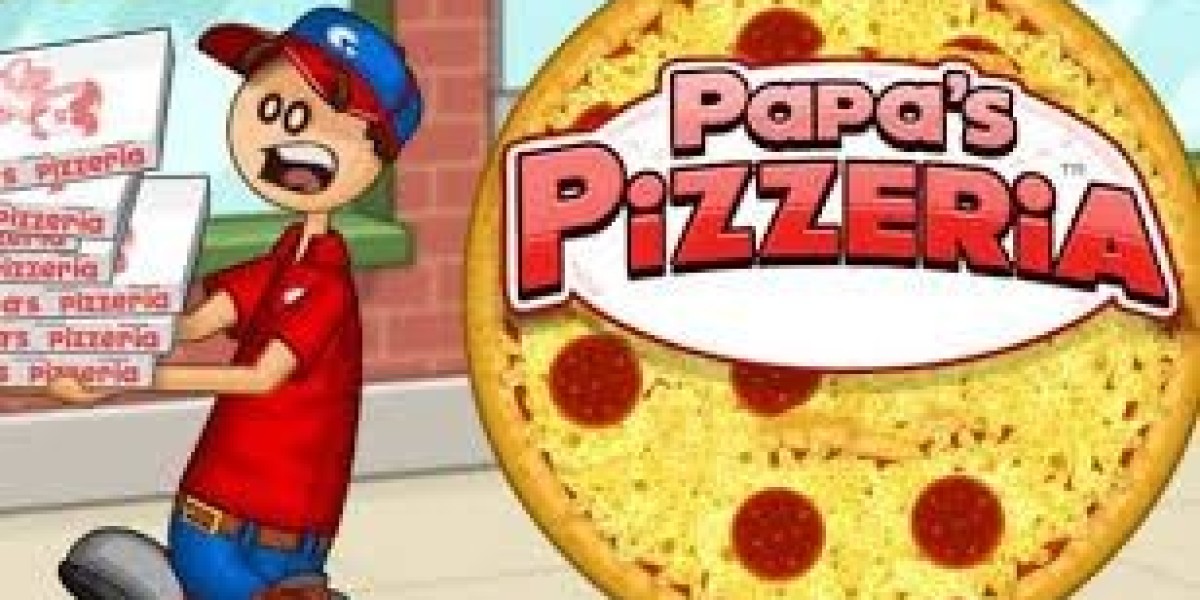

I didn’t expect a simple pizza game to stay in my memory for years.
Like a lot of people who spent time on browser gaming websites in the late 2000s and early 2010s, I originally opened Papa’s Pizzeria because I had a few minutes to kill. The graphics were simple. The premise was straightforward. Customers ordered pizzas, and I made them.
That should have been the end of it.
Instead, I found myself thinking about topping placement, baking times, and customer scores long after closing the browser tab.
Years later, I still remember the strange mix of stress and satisfaction that came from running that virtual pizza shop.
A Game Built on Tiny Responsibilities
At first glance, Papa’s Pizzeria doesn’t seem complicated.
A customer arrives and places an order. You write down their preferences, add toppings, bake the pizza, cut it correctly, and serve it.
Each task is easy on its own.
The interesting part is what happens when several customers arrive at once.
Suddenly, the game stops feeling like a relaxing cooking simulator and starts feeling like controlled chaos. One pizza is baking. Another needs pepperoni. A third customer has been waiting longer than you'd like.
None of these problems are serious, but together they create pressure.
That pressure is what keeps many players engaged.
Unlike action games that demand fast reflexes, Papa’s Pizzeria creates tension through responsibility. You're constantly aware that every unfinished order is another customer becoming less patient.
The Psychology of Keeping Everyone Happy
One thing I appreciate more now than when I was younger is how effectively the game uses customer satisfaction as motivation.
Most players don't continue because they're obsessed with pizza.
They continue because they want good scores.
When a customer leaves with a high rating, it feels rewarding. When someone gives a disappointing score, even after you've worked hard, it feels strangely personal.
The game never punishes failure in dramatic ways. There are no explosions or game-ending disasters.
Instead, it uses subtle feedback.
A slightly lower score.
A smaller tip.
A customer who doesn't look quite as pleased.
Those tiny signals encourage players to improve.
It's similar to what happens in many habit-forming games. The reward isn't huge, but it's frequent enough to keep you paying attention.
You start thinking, "I can probably do that better next time."
Then another day begins.
Multitasking Creates the Real Challenge
The actual difficulty of Papa’s Pizzeria isn't making pizzas.
It's managing time.
Most mistakes happen because players are thinking about three different orders simultaneously.
While one pizza bakes, you're placing toppings on another. While doing that, a new customer walks through the door. Meanwhile, a finished pizza is sitting in the oven getting slightly overcooked.
The game constantly asks players to divide their attention.
What's interesting is that it never feels unfair.
Whenever I made mistakes, I usually knew why.
I forgot a topping.
I left something in the oven too long.
I got distracted by a new order.
The game creates a sense of accountability that many modern games struggle to achieve. Success feels earned because every high-scoring day is the result of dozens of small decisions.
Why Waiting Can Be Surprisingly Fun
Most game designers try to eliminate waiting.
Papa’s Pizzeria does the opposite.
Baking takes time.
Customers wait.
Orders build up.
Instead of removing these delays, the game turns them into meaningful decisions.
Do you start another pizza while the first one cooks?
Should you take the next customer's order immediately or finish preparing toppings?
Can you squeeze in another task before something burns?
The waiting periods become strategic moments rather than empty downtime.
This is one reason the game remains engaging despite its simple mechanics.
Every second feels useful.
Even when nothing dramatic is happening, you're planning your next move.
The Nostalgia Factor Is Real
Part of my affection for Papa’s Pizzeria definitely comes from nostalgia.
Browser games occupied a unique space in gaming culture.
You didn't need expensive hardware. You didn't need to install giant updates. You could open a game during lunch, after school, or while procrastinating on homework.
Many of those games disappeared or became difficult to access over time.
Papa's Pizzeria remains memorable because it represented a certain era of online gaming.
The design philosophy was different.
Games didn't need sprawling open worlds or cinematic stories. They just needed a simple loop that felt good.
That simplicity is something I occasionally miss.
When modern games ask for dozens of hours before revealing their best content, it's refreshing to remember a game that showed its appeal within the first ten minutes.
For players who enjoy other management-focused experiences, some of the same ideas appear in [restaurant simulation favorites], though few capture the same balance of accessibility and challenge.
Small Systems Create Powerful Habits
One lesson I've taken from Papa’s Pizzeria is how powerful small systems can be.
There aren't many mechanics.
Orders.
Toppings.
Baking.
Cutting.
Customer ratings.
That's basically it.
Yet those systems interact in ways that create surprising depth.
A delayed order affects customer happiness.
Poor topping placement lowers scores.
Incorrect baking affects tips.
Everything connects.
The result is a gameplay loop that encourages constant improvement.
Players naturally develop routines.
Maybe you always start by taking every order first.
Maybe you prioritize baking before topping preparation.
Maybe you've developed a personal system for handling rush periods.
The game never tells you exactly how to work. It allows efficiency to emerge through experience.
That's a subtle form of player engagement that deserves more recognition.
The Satisfaction of a Perfect Day
Few moments in Papa’s Pizzeria are as satisfying as finishing a busy day with strong scores across the board.
Nothing dramatic happens.
You don't save the world.
You don't unlock some massive plot twist.
You simply managed your responsibilities well.
There's something surprisingly comforting about that.
Many games create excitement through spectacle.
Papa’s Pizzeria creates satisfaction through competence.
The reward comes from feeling organized, efficient, and prepared.
I think that's why so many players remember it fondly years later.
The game taps into a basic human desire: the feeling that everything is under control.
Even if only for a few virtual hours.
That same appeal appears in [time-management game discussions] and even in broader conversations about [why repetitive games remain enjoyable]. Players often discover that mastery itself can be rewarding, even when the tasks are simple.
Why It Still Holds Up
Gaming trends change constantly.
What felt exciting ten years ago doesn't always work today.
Yet Papa’s Pizzeria continues to stand out because its core ideas remain effective.
Clear goals.
Immediate feedback.
Meaningful multitasking.
Steady improvement.
Those principles aren't tied to any specific era.
They're simply good game design.
Whenever I revisit the game, I'm reminded that complexity isn't always necessary. Sometimes a handful of well-designed systems can create a more memorable experience than a feature list packed with mechanics.
The game understands exactly what it wants to be and never wastes time trying to become something else.
That's a quality I appreciate more as I get older.
Maybe that's why so many former players still remember specific customers, stressful lunch rushes, and the panic of noticing a forgotten pizza in the oven.
Or maybe we just spent far too much time making virtual pizzas.
Either way, it's remarkable how a game built around orders, toppings, baking timers, and customer satisfaction managed to leave such a lasting impression. When was the last time a simple game surprised you by sticking around in your memory much longer than expected?