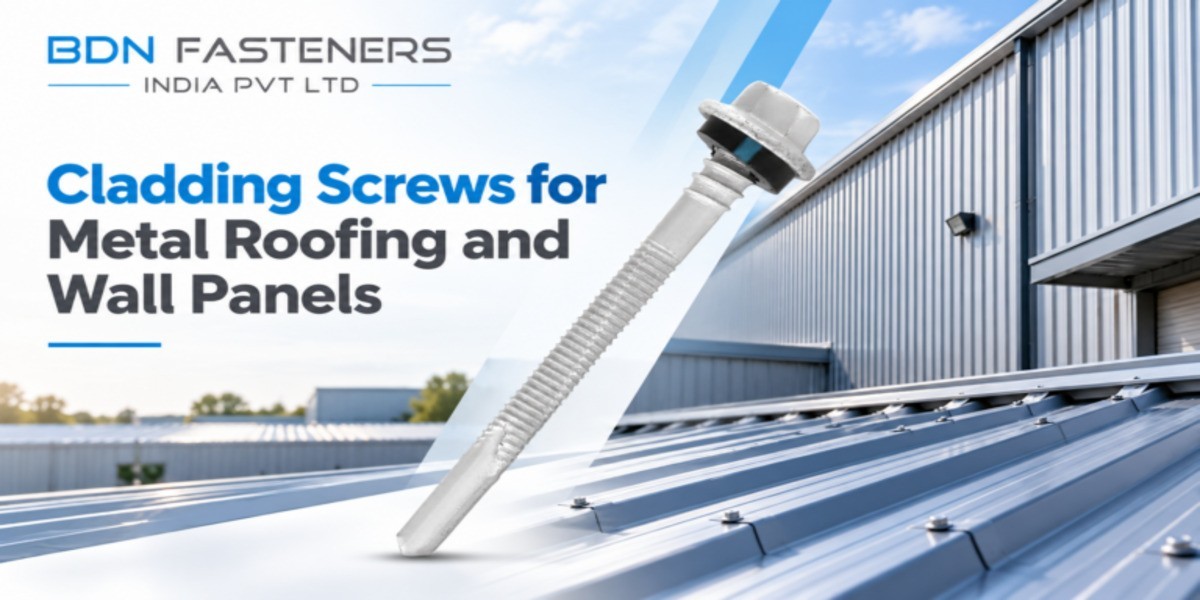

Metal roofing and wall cladding systems are widely used in industrial buildings, warehouses, commercial properties, and modern construction projects. These systems offer durability, weather resistance, and a clean architectural appearance. However, their performance depends not only on the quality of the metal panels but also on the fasteners used to secure them. This is where cladding screws play an important role.
Selecting the right screws helps maintain panel stability, prevent water leakage, and support the long-term performance of roofing and wall installations. Understanding their types, applications, and selection criteria can help contractors, builders, and construction professionals make better decisions.
What Are Cladding Screws?
Cladding screws are specialised fasteners designed to attach metal sheets, roofing panels, and wall cladding materials to supporting structures. They are commonly manufactured using corrosion-resistant materials and may feature protective coatings to withstand different environmental conditions.
Many cladding screws come with self-drilling points, allowing them to penetrate metal sheets and supporting steel structures without requiring separate pre-drilling. They may also include sealing washers that help prevent moisture from entering through the fastening points.
Importance of Using the Right Cladding Screws
Choosing suitable fasteners is essential for maintaining the strength and reliability of metal roofing and wall panels. Some major benefits include:
1. Strong Panel Fixing
Properly selected screws provide a secure connection between metal panels and supporting structures. This helps reduce panel movement caused by wind pressure, vibrations, and other external forces.
2. Protection Against Water Leakage
Cladding screws with suitable sealing washers help protect fastening points from rainwater penetration. Correct installation and washer compression are equally important for achieving effective sealing.
3. Corrosion Resistance
Roofing and wall panels are frequently exposed to sunlight, moisture, humidity, and changing temperatures. Corrosion-resistant screws help maintain fastening strength and extend the service life of the installation.
4. Faster Installation
Self-drilling cladding screws can simplify installation by reducing the need for pre-drilling. This helps contractors save time and improve productivity on construction sites.
Different Types of Cladding Screws
Different construction applications require different fastening solutions. Some commonly used options include:
Self-Drilling Screws: Designed to drill through metal sheets and supporting structures, making them suitable for many metal roofing and cladding applications.
Self-Tapping Screws: Used for creating threads in pre-drilled or suitable materials to establish a secure connection.
Hex Head Screws: Provide a firm grip for installation using compatible driving tools.
Washer-Head Screws: Often supplied with sealing washers to improve resistance against water penetration.
Corrosion-Resistant Screws: Manufactured with suitable materials or protective coatings for applications exposed to challenging environmental conditions.
The correct type depends on the panel material, substrate thickness, environmental exposure, and project specifications.
Factors to Consider When Selecting Cladding Screws
Before purchasing fasteners for a roofing or wall cladding project, consider the following factors:
Material Compatibility: Ensure that the screw material and coating are compatible with the metal panels and supporting structure to minimise corrosion risks.
Screw Length and Diameter: Select the appropriate dimensions based on panel thickness, substrate material, and required penetration depth.
Drilling Capacity: Check whether the screw's drilling point is suitable for the thickness and type of supporting material.
Weather Conditions: Buildings located in coastal, humid, or industrial environments may require specialised corrosion-resistant fasteners.
Sealing Requirements: Choose suitable washer materials and dimensions to maintain effective weather sealing around fastening points.
Applications of Cladding Screws in Construction
Cladding screws are used across various construction and industrial applications, including:
Metal roofing systems for factories and warehouses.
External wall cladding for commercial buildings.
Industrial sheds and storage facilities.
Agricultural buildings and metal structures.
Commercial and institutional construction projects.
Metal façade and insulated panel installations.
Their versatility makes them an important component of modern metal construction systems.
Why Quality Fasteners Matter for Long-Term Performance
Even high-quality roofing and wall panels can experience installation problems when unsuitable fasteners are used. Incorrect screw selection, over-tightening, poor sealing, and inadequate corrosion protection may lead to loose panels, water leakage, or premature deterioration.
Working with a reliable fastener manufacturer or supplier helps construction professionals find products that meet their technical and application requirements. It is also important to follow manufacturer recommendations and project-specific installation guidelines.
BDN Fasteners India Pvt. Ltd. offers fastening solutions for different industrial and construction requirements. Businesses looking for suitable fasteners can explore its range of products and technical specifications to identify options for their roofing and cladding applications.
Conclusion
Cladding screws are essential components of metal roofing and wall panel installations. From providing secure panel fixing to supporting weather resistance and long-term durability, the right fasteners contribute significantly to overall construction quality.
By considering material compatibility, screw dimensions, drilling capacity, corrosion protection, and sealing requirements, contractors and builders can select appropriate fastening solutions for their projects. Investing in quality fasteners and correct installation practices helps create stronger and more reliable metal cladding systems.






