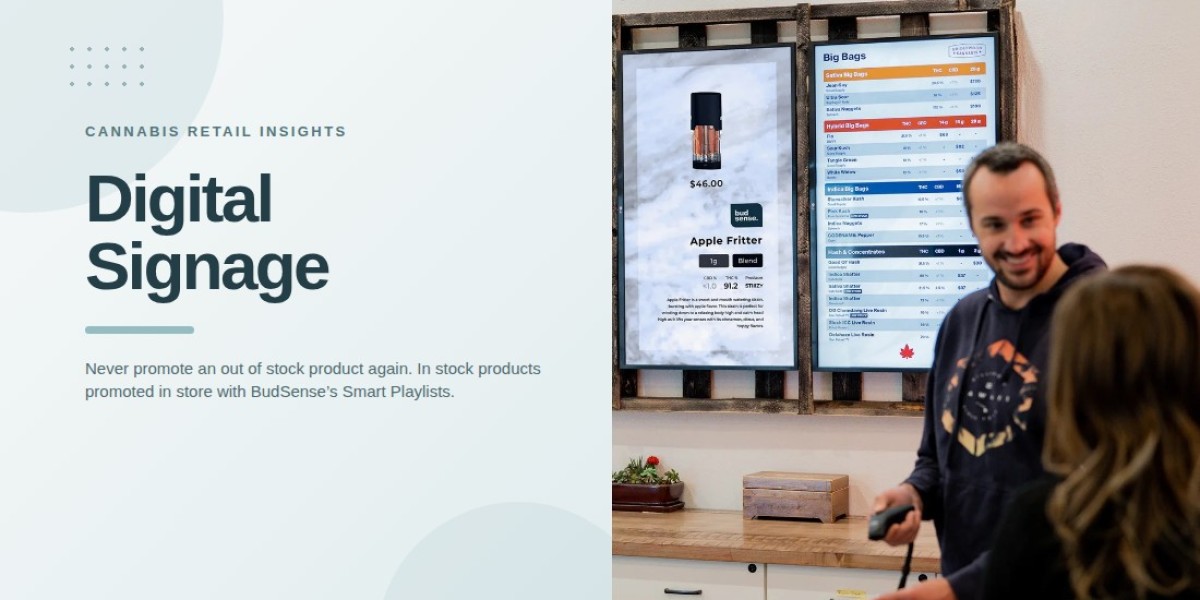

Cannabis retailers often invest time creating digital promotions to highlight products, introduce brands, and communicate special offers. However, when advertised products become unavailable, those promotions can create confusion for customers and additional work for employees. BudSense’s Smart Playlists address this challenge by connecting digital marketing assets with product inventory, helping dispensaries display relevant promotions based on product availability.
Inventory-based advertising is more than a convenience. It helps retailers coordinate marketing with daily operations, maintain accurate in-store messaging, and provide customers with a more consistent shopping experience.
1. Keep Promotions Relevant to Available Products
One challenge in cannabis retail is that inventory can change throughout the day. A product featured on a digital screen in the morning might sell out before the next customer sees the promotion.
When advertising does not reflect current availability, customers may ask staff about products they can no longer purchase. This can lead to disappointment and interrupt normal store operations.
Inventory-based advertising helps address this problem by connecting promotional content to specific products or stock information. With BudSense’s Smart Playlists, retailers can associate marketing assets with individual products or SKUs so that promotions display when the relevant products are in stock.
This approach helps keep digital screens aligned with the products customers can actually purchase, reducing the need for constant manual changes.
2. Reduce Manual Digital Signage Updates
Traditional digital signage workflows can require employees to check inventory, identify outdated promotions, remove old content, and upload replacements. Repeating these steps whenever stock changes takes time away from other retail responsibilities.
Automated advertising workflows can reduce this administrative burden. Rather than manually checking every promotion, retailers can connect marketing assets to relevant inventory and allow the system to manage their display eligibility.
For example, a dispensary promoting a particular vape product does not need to rely solely on an employee remembering to remove the advertisement when the product sells out. Inventory-linked rules can handle the change automatically.
Less manual intervention can also reduce the chance of outdated content remaining on screens. Employees can spend more time assisting customers and planning marketing activities instead of repeatedly correcting digital displays.
3. Improve Customer Confidence in Store Promotions
Customers expect in-store advertising to provide useful and accurate information. When a screen repeatedly promotes unavailable products, shoppers may become less confident in the store's messaging.
Accurate promotions help create a more reliable experience. Customers can review featured products, discuss available options with staff, and make decisions based on current information.
Inventory-based advertising also supports more productive conversations between customers and budtenders. Instead of explaining why a promoted product is unavailable, employees can focus on product details, price comparisons, and questions about the available selection.
Although inventory automation cannot eliminate every stock discrepancy, it can reduce one common source of misleading promotional content.
4. Connect Marketing Assets With Specific Products
A digital advertisement is more useful when the retailer can control exactly which product or product group it represents. Linking assets to individual SKUs gives marketing teams a structured way to manage those relationships.
For example, a retailer could prepare a promotional image for a particular flower product, assign it to the corresponding SKU, and configure the display workflow around availability. When the product is unavailable at a location, its promotion can stop appearing there until stock returns.
This method also helps teams organize marketing materials. Instead of treating every image or video as an independent file, they can manage assets according to the products they promote.
BudSense's Smart Playlists are designed for this type of inventory-linked promotion management, helping retailers coordinate digital signage with changing product availability.
5. Coordinate Promotions Across Multiple Locations
Multi-location cannabis businesses face an additional challenge: a product may be available at one store but out of stock at another. A campaign that works well in one location may therefore be inaccurate elsewhere.
A centralized promotional workflow helps businesses maintain consistent branding while accounting for differences in local inventory. Marketing teams can prepare shared campaign assets and deploy them across selected locations, while inventory-based rules determine whether the relevant promotions should appear at each store.
This approach reduces the need to create entirely separate campaigns for every location. It also helps head-office teams maintain common visual standards without assuming that every store carries exactly the same products.
For growing dispensary groups, coordinating campaigns and local availability can make digital marketing easier to manage as the number of locations increases.
6. Schedule Campaigns Around Retail Activity
Not every promotion needs to run all day. Some campaigns are intended for specific hours, daily deals, special events, or other planned periods.
Scheduling allows retailers to determine when promotional content should appear. When scheduling is combined with inventory-based rules, teams can plan campaigns in advance while keeping product availability in the process.
For example, a dispensary might schedule a promotion for a particular time window. If the promoted product is unavailable at that location, inventory-linked controls can prevent the advertisement from appearing despite the planned schedule.
This combination helps teams balance advance planning with changing store conditions. Retailers should still review campaign dates, offer terms, and relevant advertising requirements before content goes live.
7. Make Better Use of Digital Marketing Resources
Creating promotional images and videos requires planning, design work, and coordination. If assets are difficult to manage, teams may spend unnecessary time locating files, replacing outdated materials, and communicating changes between locations.
A structured digital signage system helps organize these resources around specific marketing goals and product relationships. Retailers can prepare content ahead of time and use reusable workflows rather than rebuilding every campaign from scratch.
Inventory-based advertising can also encourage more deliberate campaign planning. Teams can identify the products they want to feature, prepare appropriate creative materials, and connect those materials to inventory before deployment.
The result is a more manageable process for maintaining promotional content, particularly when products and stock levels change frequently.
8. Measure Results and Refine Promotional Strategy
Automation helps determine when content can appear, but retailers still need to assess whether their marketing is useful. Regular reviews can reveal which campaigns attract customer interest, which offers are frequently discussed, and where promotional messaging needs improvement.
Retailers can compare campaign timing, product availability, sales information, and staff feedback to understand how their promotional approach is working. These observations can guide decisions about future campaign themes, featured categories, and scheduling.
It is also important to distinguish between a promotion being displayed correctly and a promotion achieving its business goals. Inventory-based advertising helps maintain relevance, but results depend on factors such as pricing, product demand, creative quality, and the overall customer experience.
Combining accurate automation with thoughtful performance reviews gives retailers a practical foundation for improving their digital marketing over time.
Bringing Inventory and Advertising Together
Cannabis retailers looking to coordinate promotional content with available products can use BudSense menu software to support digital signage management, inventory-linked Smart Playlists, and more consistent marketing workflows across their stores.
Final Thoughts
Inventory-based advertising helps cannabis retailers keep digital promotions connected to the products customers can actually purchase. By reducing manual updates, supporting location-specific availability, and making campaign management more structured, retailers can improve the accuracy of their in-store messaging.
Smart Playlists can help automate important parts of this process, but successful advertising still depends on clear creative content, appropriate scheduling, accurate inventory data, and regular performance reviews. When these elements work together, dispensaries can create a more reliable and organized promotional experience for customers and staff.
Frequently Asked Questions
1. What is inventory-based advertising in cannabis retail?
Inventory-based advertising connects promotional content with product availability. This helps retailers display relevant promotions rather than continuing to advertise products that are out of stock.
2. How do BudSense’s Smart Playlists work?
BudSense’s Smart Playlists connect digital marketing assets to products or SKUs. The system uses inventory information to help ensure that associated promotions appear when the relevant products are available.
3. Why should dispensaries automate digital signage updates?
Automation reduces repetitive manual work, helps limit outdated promotions, and allows staff to focus on customer service and other store responsibilities.
4. Can inventory-based advertising support multiple dispensary locations?
Yes. Inventory-linked promotions can support location-specific availability, while centralized tools and templates help retailers coordinate campaign content and branding across multiple stores.
5. Does inventory-based advertising guarantee better sales?
No. It can improve promotional accuracy and reduce the risk of advertising unavailable products, but sales results also depend on customer demand, pricing, product selection, and campaign quality.