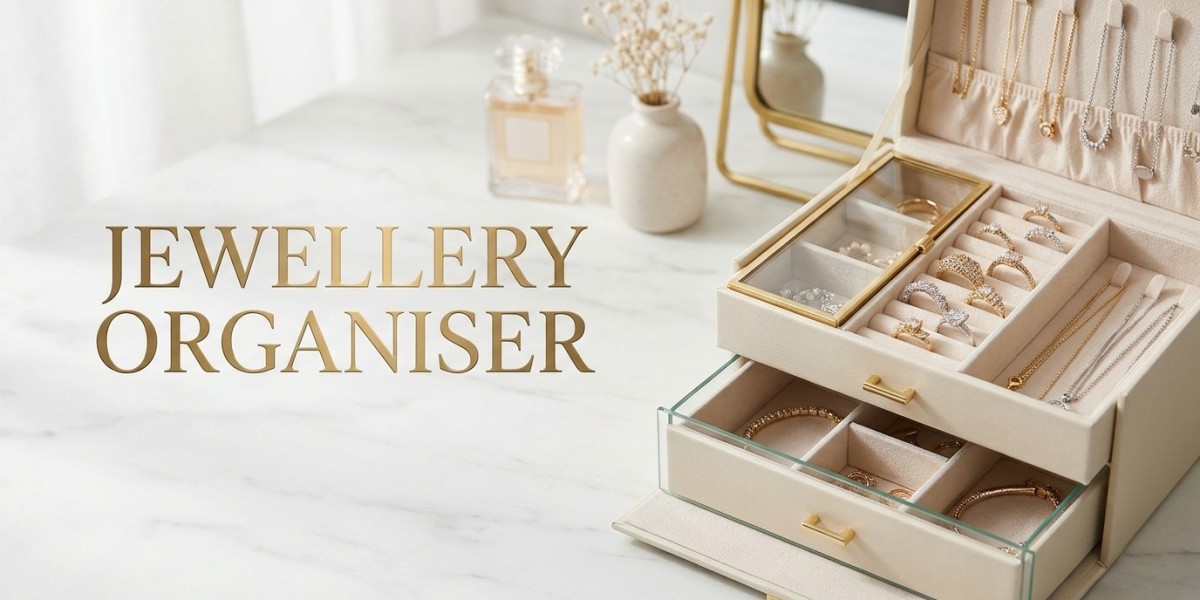

Keeping jewellery in order becomes much easier when every piece has its own place. A Jewellery Organiser with multiple compartments helps you separate rings, earrings, necklaces, bracelets, and other accessories without filling your dressing table with several small boxes. Instead of searching through a tangled collection every morning, you can find the piece you want and return it to the same space after wearing it.
For people who own jewellery in different styles and materials, a well planned organiser can make a noticeable difference. You might need small sections for everyday earrings, deeper spaces for chunky bracelets, and narrow slots for rings. The right arrangement keeps your collection visible, makes better use of available space, and helps reduce accidental scratches or tangles.
Why Choose Jewellery Organiser Boxes with Multiple Compartments?
A single open box may be enough for a few pieces, but a growing collection usually needs a more organised layout. Jewellery Organiser Boxes provide separate areas for different items, making daily use simpler and storage more practical.
Keep Different Jewellery Types Separate
Rings, necklaces, earrings, and bracelets do not all need the same type of storage. Long chains can become tangled when placed beside other accessories, while small earrings can easily go missing among larger pieces.
Compartments help you assign a specific place to each category. You could keep rings in padded slots, earrings in smaller sections, and bracelets in wider spaces. This arrangement makes it easier to find matching pieces and return them after use.
Make Better Use of Dressing Table Space
A collection spread across several containers can take up more room than expected. A single Jewellery Storage Organiser with multiple sections can bring those items together in one place.
Some designs include removable trays or drawers, allowing you to store everyday pieces near the top and less frequently worn jewellery below. If you have limited space, measure the organiser before buying it and check whether the lid opens comfortably where you plan to keep it.
Reduce Scratches and Tangling
Jewellery can be damaged when pieces rub against one another, especially when delicate chains or softer gemstones are stored beside harder items. Separate compartments reduce direct contact and make it easier to handle individual pieces.
The Gemological Institute of America recommends storing jewellery carefully, keeping pieces separated, and protecting delicate gemstones from rough objects and chemicals. Its jewellery care guidance is a useful reference when deciding how to arrange your collection. GIA jewellery care advice.
Popular Types of Jewellery Boxes with Compartments
Not every jewellery box is designed in the same way. Some focus on compact storage, while others provide a larger layout for people with extensive collections.
Drawer Style Jewellery Organisers
Drawer style designs are useful when you want to keep jewellery covered and arranged in separate layers. They often include several removable trays or sliding drawers, each designed for a different category of accessories.
For example, the top tray might hold rings and everyday earrings, while a lower drawer stores bracelets, watches, or special occasion jewellery. Some models also include a small mirror or a separate section for necklaces.
Before buying, check that the drawers slide smoothly and that you can reach the lower sections without lifting the entire organiser. A drawer that catches or becomes difficult to open can make an otherwise attractive box frustrating to use.
Multi Compartment Jewellery Boxes
A Multi Compartment Jewellery Box usually has a series of individual sections under one lid. This design works well for people who want to see several types of jewellery at once.
Smaller compartments can hold studs, rings, and charms, while larger sections accommodate bangles or statement earrings. Some boxes have adjustable dividers, which allow you to change the layout as your collection grows.
Look at the size of the compartments rather than simply counting them. A box with many tiny sections may not be suitable if you own larger bracelets or necklaces.
Travel Jewellery Organisers
Travel organisers are compact and designed to keep jewellery secure inside a handbag or suitcase. They may include zipped pockets, ring rolls, necklace hooks, and small pouches.
These are particularly useful when you want to carry a few pieces without taking your entire collection. Choose a design with secure closures and enough separation to prevent chains from tangling during movement.
For valuable jewellery, avoid leaving the organiser unattended in public places or treating it as a secure storage solution.
Stackable Jewellery Storage Boxes
Stackable boxes allow you to build a storage system from several compatible trays. Each layer can serve a different purpose, which is useful when your collection changes over time.
You might begin with a ring tray and an earring tray, then add another layer for bracelets or watches. This approach can save surface space, but you should check that the boxes are designed to stack securely and remain stable when opened.
Choosing the Right Compartments for Your Jewellery
The most useful Jewellery Organiser for Rings and Earrings is one that matches the pieces you own. A compartment layout should make jewellery easy to remove without forcing you to move several other items first.
Ring Slots and Padded Sections
Ring slots hold rings upright and help keep them separated. They are suitable for wedding bands, engagement rings, and everyday rings that you wear regularly.
If you have rings with large settings, check that the slots are wide and deep enough. Forcing a ring into a narrow section can damage the setting or make it difficult to remove.
Earring Compartments
Small sections are useful for studs, hoops, and earrings with separate backs. Keeping pairs together makes it easier to find matching pieces.
For larger earrings, choose wider compartments that allow the pieces to lie flat without pressing against one another. If the box has earring holes, check that they match the fastening style of your jewellery.
Necklace Sections
Necklaces need more attention because chains can twist around each other surprisingly quickly. Some organisers include hooks or individual hanging sections, while others provide long compartments for laying chains flat.
If your organiser does not have necklace hooks, small individual pouches can help keep delicate chains separate. Fasten each clasp before storing the necklace to reduce the chance of tangling.
Bracelet and Watch Compartments
Bracelets and watches often need wider or deeper spaces than rings and earrings. A flat compartment may work for slim bracelets, while bulky bangles or watches may require a separate section.
Avoid squeezing several large pieces into a single space. They should be easy to lift out without scratching nearby jewellery or putting pressure on delicate clasps.
Materials and Finishes to Consider
The material affects the appearance, weight, durability, and everyday use of an organiser. Choosing a finish that suits your room is useful, but the interior layout and construction deserve equal attention.
Velvet lined organisers offer a soft surface and a traditional jewellery box appearance. They are suitable for many rings, earrings, and bracelets, provided the lining is clean and the compartments fit the pieces properly.
Wooden organisers have a firm structure and may suit traditional bedrooms or dressing areas. Check the quality of the hinges, drawer runners, and interior lining before buying.
Acrylic organisers allow you to see your collection without opening every compartment. They can look neat in modern rooms, although transparent surfaces tend to show fingerprints and dust. Use separate soft compartments for delicate pieces rather than allowing jewellery to slide against hard surfaces.
Leather or imitation leather organisers often have a smooth exterior and a compact design. Inspect the stitching, fasteners, and internal dividers to make sure the box will hold up to regular use.
There is no single best material for every collection. The right option depends on your available space, budget, preferred appearance, and the type of jewellery you need to store.
How to Organise Your Jewellery Efficiently
Buying a box is only the first step. A simple storage routine will help you get more use from it.
Sort your collection. Group rings, earrings, necklaces, bracelets, watches, and other accessories before deciding how much space each category needs.
Separate everyday and occasional pieces. Keep the jewellery you wear most often in the easiest compartments to reach.
Give delicate items their own space. Store fine chains and easily scratched pieces separately from heavier accessories.
Use labels if needed. If your organiser has many drawers, small labels can help you find specific categories quickly.
Review the layout regularly. Remove items you no longer wear from the main compartments and rearrange the space as your collection changes.
You do not need to make the arrangement complicated. The goal is to create a system that feels natural to use and is easy to maintain.
Jewellery Storage Solutions for Better Care
Good storage helps protect jewellery, but it cannot prevent every type of wear or tarnishing. The condition of your jewellery also depends on its materials and the environment where it is kept.
Make sure pieces are dry before storing them, especially after cleaning. Keep jewellery away from direct sunlight, excessive heat, and household chemicals. The Gemological Institute of America advises taking care with perfumes, hairspray, and cleaning products because they can damage some metals and gemstones.
Silver may tarnish over time, so a suitable anti tarnish pouch or lining can be helpful. Tiffany also recommends keeping silver dry and storing individual pieces in tarnish resistant materials. Tiffany's silver storage guidance.
Pearls and softer gemstones need particular care. Store them separately from rough or sharp objects, and follow care advice appropriate to the material. An organiser with soft compartments can help, but the box itself should be kept in a suitable location.
What to Check Before Buying a Jewellery Organiser
Before choosing a new organiser, consider these practical points.
| Feature | What to look for |
|---|---|
| Compartment size | Enough room for the jewellery you own |
| Interior lining | Smooth surfaces that do not catch delicate pieces |
| Storage capacity | Space for your current collection and likely additions |
| Closure | A lid or fastening that stays secure |
| Accessibility | Drawers and compartments that open easily |
| Dimensions | A suitable fit for your dressing table, drawer, or wardrobe |
| Construction | Sturdy hinges, dividers, and drawer runners |
| Flexibility | Removable or adjustable dividers if your needs may change |
It is worth measuring your available space and comparing the internal dimensions of different boxes. Product photographs can make compartments look larger than they are, so check the measurements and return policy before ordering.
Find a Storage System That Fits Your Routine
The best Jewellery Organiser is not necessarily the largest or most decorative option. It is the one that gives your jewellery enough space, keeps similar pieces together, and makes everyday choices easier.
If you own a small collection, a compact box with a few well sized compartments may be all you need. If you have many different accessories, a drawer style or modular organiser can give you more flexibility. Think about the jewellery you wear most often, the space available in your room, and the level of protection each piece requires.
With a suitable layout and a little regular care, Jewellery Organiser Boxes can help you keep your collection tidy, find matching pieces faster, and reduce unnecessary tangling and contact between jewellery. A well chosen organiser makes it easier to care for the pieces you value while keeping your dressing area neat and practical.