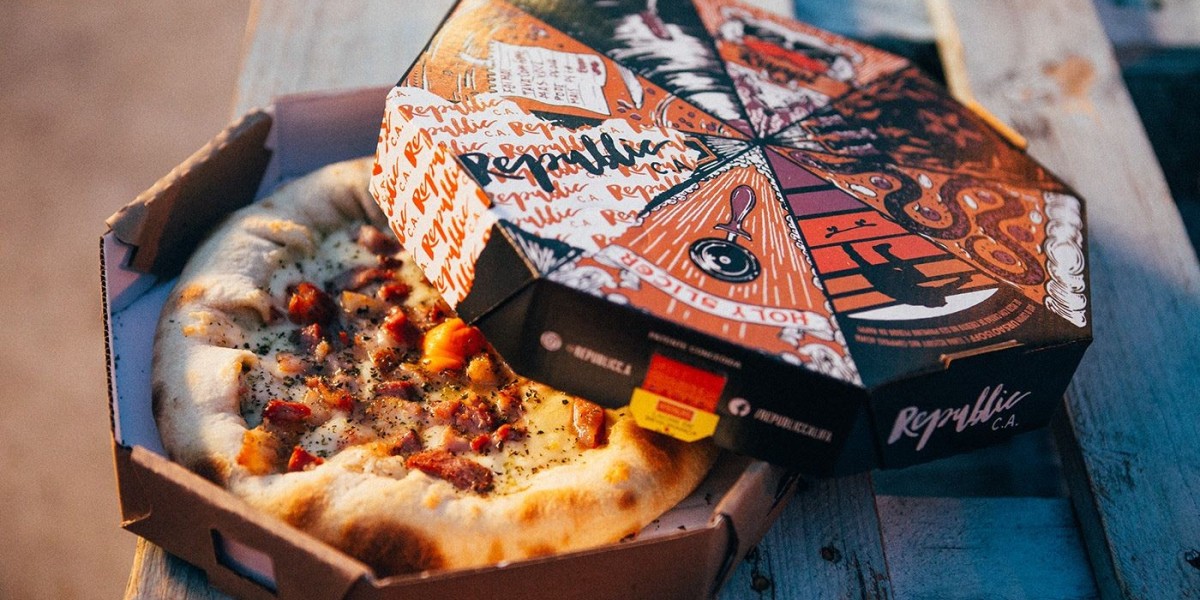

How to Choose Pizza Packaging for Your Restaurant in 2026
Pick sturdy, vented, grease-resistant boxes that match your pizza sizes and carry your brand. Custom Food Packaging Boxes make any restaurant look professional from the counter to the customer's door, while Custom Pizza Boxes keep crusts crisp and toppings in place. Test samples with real pies before you place a large order.
Why Packaging Matters for Pizza Sellers
Pizza is one of the most competitive foods in the country. Industry sources such as PMQ Pizza Magazine estimate that Americans eat roughly 3 billion pizzas a year, so customers have plenty of places to order from. When the food is similar, the experience decides who gets the next order.
A soggy crust, a squashed topping layer, or a grease stain on the bag can ruin that experience quickly. Custom Food Packaging Boxes help you control the details, from how the pizza travels to how your brand looks on a doorstep or a kitchen counter.
What Makes Pizza Packaging Different
Pizza is flat, hot, and full of steam. Trap that steam and the crust goes limp. Let the box flex and the cheese slides to one side.
Built Around the Pie
Custom Pizza Boxes are sized to the pan or stone you bake on, with just enough clearance to slide the pizza in without bending the edge. Most are made from corrugated board, which adds strength and insulation while the pizza travels.
Features Worth Looking For
- Corrugated walls: Hold their shape when stacked in a delivery bag.
- Vent holes or slots: Release steam so crusts stay crisp.
- Grease-resistant coating: Stops oil from soaking through the lid.
- Easy-lock corners: Keep the box closed during delivery without tape.
Match the Box to Your Menu
Most pizzerias sell more than a single size or product, so your packaging lineup should cover everything.
- Standard square boxes: The classic choice for 10, 12, 14, 16, and 18 inch pies.
- Slice boxes: Small, flat, and ideal for walk-up or lunch service.
- Calzone and stromboli boxes: Taller, narrower styles for folded items.
- Side boxes: Compact boxes for wings, breadsticks, and garlic knots.
Sizing Tips
Measure the finished pizza, not the pan label, because baked crusts can spread. Add about half an inch of room on each side. A box that is too tight bends the crust, and one that is too loose lets the pizza slide. Request a sample, fill it with a real pie, and carry it for fifteen minutes to see how it holds up.
Materials and Food Safety
Before you choose colors or a logo, confirm that the board is safe for direct food contact. Custom Food Packaging Boxes should use food-grade paperboard or corrugated board, and your supplier should be able to confirm that coatings, glues, and inks meet food-contact standards.
Heat, Steam, and Grease
Hot, oily food puts stress on any box. A coated or lined interior holds up better than plain board, and a small vent helps release steam during delivery. If you sell deep-dish or extra-cheesy pies, ask about a heavier flute or an added liner.
Design Choices That Build Your Brand
A pizza box is one of the largest branded surfaces you have, and it often sits on a table in front of a whole group. Keep the design simple, with a bold logo, one or two colors, and a short line of copy. Custom Pizza Boxes with a clean one-color print on kraft board look modern, cost less to print, and still recycle easily.
Make It Easy to Spot and Share
A distinctive color or pattern helps customers recognize your brand at a glance, and a social handle on the lid encourages photos. Skip tiny details that don't print well on corrugated board.
Sustainability Without the Guesswork
Recycled kraft, FSC-certified fiber, and water-based inks are all widely available. One common problem is that grease-soaked cardboard is harder to recycle, so skip heavy plastic coatings and consider a liner that is easy to remove. Custom Food Packaging Boxes made from recyclable materials give eco-minded customers one more reason to choose your pizzeria, and you can mention it on your menu or app.
Timeline and Budget Tips
Work backward from your opening or reorder date so you aren't paying for rushed production:
- Week 1: Confirm pizza sizes, box styles, and materials.
- Weeks 2 to 3: Approve artwork and test a physical sample.
- Weeks 4 to 6: Place your order and confirm delivery.
- Ongoing: Reorder before your stock runs low.
To control costs, stick to standard sizes and limit the number of print colors. Custom Food Packaging Boxes also get cheaper per unit at higher quantities, so order what you will realistically use over the next few months.
Frequently Asked Questions
Can I order small quantities for a new pizzeria?
Yes. Many manufacturers offer runs in the low hundreds, especially with digital printing. Custom Food Packaging Boxes in small batches are a smart way to test a design before scaling up.
Are printed pizza boxes food safe?
They can be, as long as the inks and coatings are rated for food contact. Ask your supplier for confirmation before you order.
How do I keep the crust from getting soggy?
Use a vented box and avoid sealing a very hot pizza inside right away. Letting steam escape for a moment before closing the lid helps the crust stay crisp.
Final Thoughts
Great pizza packaging protects the food, keeps customers happy, and gives your brand a memorable look. Test samples, keep your design simple, and plan your timeline well before you run low. If you'd like help bringing your packaging to life.





