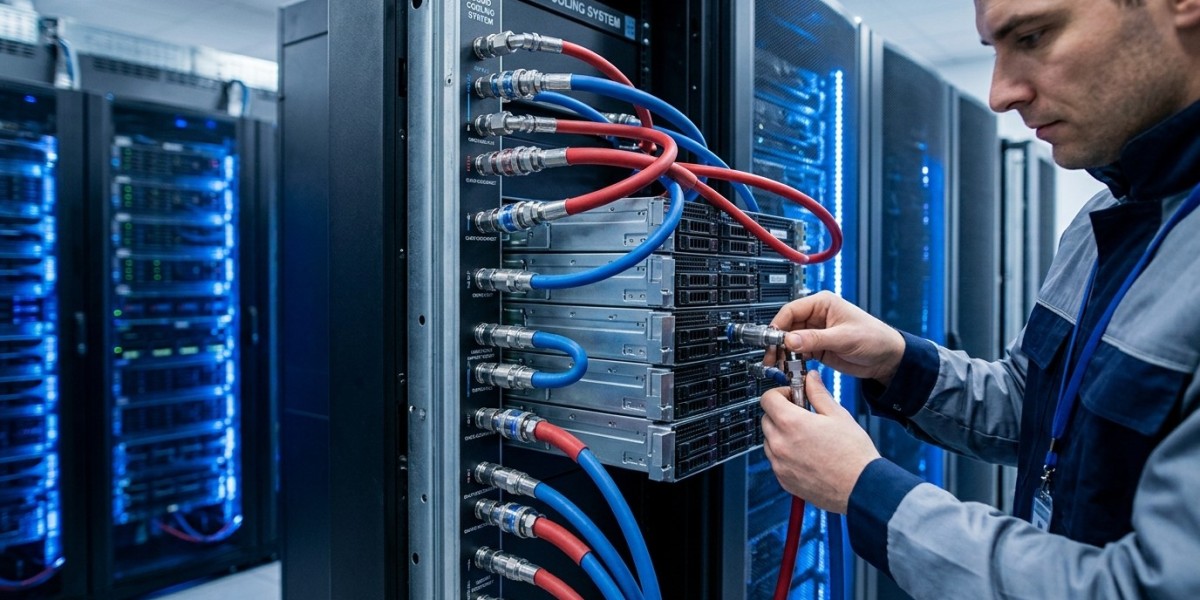

Modern data centers require reliable cooling systems to maintain server performance and protect sensitive equipment. As artificial intelligence, cloud computing, and high-performance computing continue to grow, traditional air cooling is becoming less effective for many high-density environments. Liquid cooling offers a practical solution by transferring heat away from processors and other critical components more efficiently.
Fittings for liquid-cooled data centers play an important role in these systems. They connect pipes, tubes, hoses, pumps, heat exchangers, and cooling distribution units. High-quality fittings help maintain a secure flow of coolant throughout the system while reducing the risk of leaks and unexpected downtime.
Choosing suitable fittings is essential for building a cooling infrastructure that supports demanding workloads. The right components can improve reliability, simplify maintenance, and help data center operators manage increasing cooling requirements.
Why Liquid Cooling Is Important for Data Centers
Data centers generate significant heat because servers operate continuously and process large amounts of information. When temperatures rise beyond recommended limits, equipment may experience reduced performance, thermal throttling, or hardware damage.
Liquid cooling addresses this challenge by using a coolant to absorb and transport heat. Depending on the system design, the coolant may circulate through cold plates attached to processors, rear-door heat exchangers, or immersion cooling equipment.
Fittings connect these components and maintain the required circulation throughout the cooling network. Their quality directly affects system reliability because even a small leak can damage electronic equipment or interrupt operations.
As data centers increase their computing density, cooling systems must handle greater thermal loads. Properly selected fittings help maintain consistent coolant delivery and support the long-term performance of the entire infrastructure.
Common Types of Cooling System Fittings
Different liquid cooling systems require different fitting designs. Each type serves a specific purpose, depending on the pipe material, operating pressure, coolant, and connection method.
Threaded fittings are commonly used to connect compatible components, including pumps, manifolds, and cooling distribution equipment. They provide a secure connection when installed with the correct specifications and sealing methods.
Compression fittings connect tubes without requiring welding. They are useful in applications where dependable connections and straightforward maintenance are important. Their compatibility with the tubing material and dimensions must be verified before installation.
Quick-disconnect fittings allow technicians to connect or separate coolant lines with minimal fluid loss. These components are particularly valuable when servers or cooling modules require replacement or servicing. Depending on the design, they can help reduce spills during maintenance.
Elbow fittings change the direction of coolant flow, while tees divide or combine flow paths. Adapters connect components with different connection types or sizes. Selecting the appropriate design helps create an organized cooling network without unnecessary restrictions.
Materials Used in Data Center Cooling Fittings
Material selection is an important consideration when choosing fittings for liquid-cooled data centers. Components must withstand the coolant's chemical properties, operating temperatures, and system pressure.
Stainless steel is a popular option because it offers strength, corrosion resistance, and durability. It can be suitable for demanding cooling applications where long service life and dependable performance are priorities.
Brass fittings may be appropriate for certain systems, depending on coolant compatibility and operating conditions. However, their suitability should be confirmed because some coolants and mixed-metal systems can create corrosion concerns.
Plastic fittings are also used in specific applications because they can be lightweight and resistant to certain chemicals. Their pressure and temperature ratings must match the intended operating environment.
Regardless of the material, all wetted components should be compatible with the selected coolant. Seal materials, including elastomers, also require careful evaluation to prevent swelling, deterioration, and leakage over time.
Key Factors When Selecting Cooling Fittings
Selecting the right fittings requires more than comparing prices or dimensions. Data center operators should evaluate several technical factors to ensure reliable performance.
Pressure ratings are particularly important because fittings must safely handle normal operating pressure and expected pressure variations. Temperature limits should also match the cooling system's operating range.
Flow requirements deserve equal attention. Fittings with unsuitable internal dimensions or restrictive designs can increase pressure losses and affect coolant distribution. Engineers should consider the complete flow path rather than evaluating individual components in isolation.
Connection compatibility is another essential factor. Thread standards, tubing dimensions, sealing arrangements, and installation requirements must match the connected equipment. Incorrect connections can create leaks or installation difficulties.
Maintenance requirements should also influence purchasing decisions. Components that allow easy inspection, replacement, and servicing can reduce maintenance time. Working with experienced suppliers can help businesses identify fittings that meet their technical specifications and long-term operating needs.
Preventing Leaks and Maintaining System Reliability
Leak prevention is one of the most important responsibilities in liquid-cooled data center design. Coolant leaks near servers, power supplies, or electrical connections can create serious operational problems.
Proper installation begins with verifying that every fitting matches the required connection type and system specifications. Technicians should follow manufacturer instructions for tightening, sealing, and assembly. Excessive tightening can damage threads or seals, while insufficient tightening may compromise the connection.
Pressure testing and leak checks should be completed according to the system manufacturer's requirements before equipment enters service. Monitoring systems can also help identify unusual pressure changes, coolant loss, or other warning signs.
Regular inspections are valuable even when no immediate problems are visible. Maintenance teams should examine accessible connections for corrosion, physical damage, loose components, and signs of leakage.
A planned maintenance program helps identify potential issues before they affect cooling performance. Keeping compatible replacement fittings available can also shorten repair times and reduce unnecessary interruptions.
The Role of Quality Suppliers
Reliable suppliers help data center operators source fittings that meet demanding technical requirements. They should provide accurate product specifications, material information, pressure ratings, connection details, and compatibility guidance.
Experienced suppliers can also help businesses choose suitable fittings for new installations, cooling upgrades, and replacement projects. Access to consistent product quality is particularly important for facilities that operate continuously and cannot afford frequent maintenance interruptions.
Before placing an order, buyers should confirm product availability, manufacturing standards, documentation, and technical support. Samples or product testing may be appropriate for critical applications where compatibility needs additional verification.
Building a relationship with a dependable supplier can simplify procurement and support future expansion. As cooling requirements change, access to suitable components becomes increasingly important for maintaining efficient data center operations.
Conclusion
Fittings for liquid-cooled data centers are essential components that support safe coolant circulation, reliable connections, and effective heat management. Their design, material, pressure rating, and compatibility all influence cooling system performance.
By selecting high-quality fittings, following correct installation practices, and maintaining regular inspection schedules, data center operators can reduce leakage risks and support dependable operations. Working with knowledgeable suppliers also helps ensure that every component meets the requirements of the intended application.
As high-density computing continues to expand, reliable liquid cooling infrastructure will remain important. Investing in suitable fittings helps businesses build cooling systems that are durable, maintainable, and ready for future demands.






