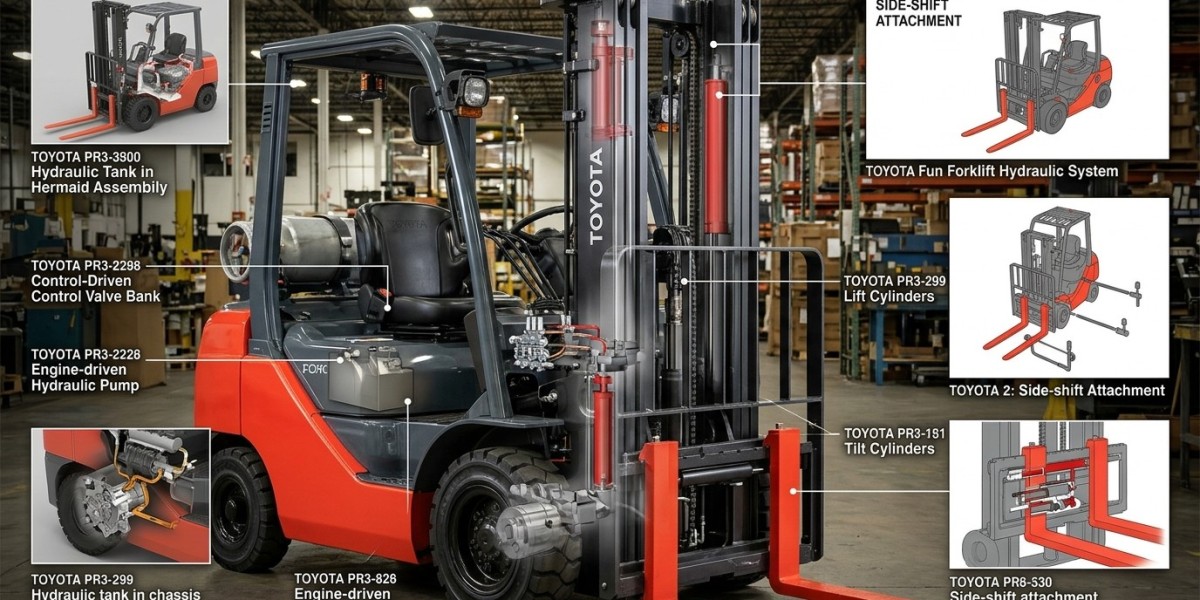

Toyota forklifts are widely used in warehouses, manufacturing facilities, distribution centers, and construction sites. Their hydraulic systems play an important role in lifting, lowering, and positioning heavy loads safely. Toyota forklift hydraulics help operators move materials efficiently while maintaining control over the forks and lifting mechanism.
A hydraulic system uses pressurized fluid to transfer power from one component to another. When the operator moves the hydraulic control lever, the system directs fluid toward the appropriate cylinder. This movement allows the forks to rise or lower according to the operator's needs. The system also supports other functions, such as mast tilting and certain attachment operations.
The performance of the hydraulic system affects the forklift's overall productivity. When all components work correctly, operators can handle pallets, machinery, boxes, and other materials with greater precision. Regular inspection and maintenance help keep the system operating reliably.
Main Components of a Toyota Forklift Hydraulic System
Several components work together to provide consistent hydraulic performance. Understanding their functions helps forklift owners recognize potential problems and arrange suitable repairs.
The hydraulic pump creates the flow needed to move fluid through the system. It draws hydraulic oil from the reservoir and supplies it to the control valves. If the pump becomes worn or damaged, the forklift may experience slow lifting, unusual noises, or reduced lifting power.
Hydraulic cylinders convert fluid pressure into mechanical movement. The lift cylinders raise and lower the mast, while tilt cylinders adjust the mast angle. Damaged seals or worn cylinder surfaces can cause fluid leakage and affect lifting performance.
Control valves direct hydraulic oil to the required components. These valves allow operators to control lifting, lowering, and tilting movements. Problems with a valve may lead to inconsistent operation or difficulty controlling the forks.
Hoses, fittings, and seals carry hydraulic fluid throughout the system. These components must withstand pressure and regular movement. Cracked hoses, loose fittings, and deteriorated seals can cause leaks that reduce system efficiency.
The hydraulic reservoir stores the oil required for operation. Clean fluid and the correct oil level help protect internal components from unnecessary wear.
Common Problems With Toyota Forklift Hydraulics
Hydraulic problems can develop because of regular use, poor maintenance, contamination, or component wear. Identifying warning signs early can help prevent expensive repairs and unexpected equipment downtime.
One common problem is slow lifting. If the forks take longer than usual to rise, the cause may involve low hydraulic fluid, a worn pump, a restricted filter, or internal leakage. A technician should inspect the system to determine the actual cause.
Another issue is hydraulic fluid leakage. Oil around the cylinders, hoses, fittings, or pump may indicate damaged seals or loose connections. Leaks should be addressed promptly because low fluid levels can affect performance and increase the risk of component damage.
Some forklifts experience uneven lifting or difficulty maintaining a raised load. These symptoms may result from cylinder seal failure, valve problems, or other internal hydraulic faults. Because lifting equipment carries heavy loads, operators should stop using a forklift that cannot hold or control a load safely.
Unusual whining or grinding sounds may also indicate a problem. Restricted fluid flow, air entering the system, or pump wear can contribute to abnormal noise. A professional inspection can help identify the source before the damage becomes more serious.
Maintaining Toyota Forklift Hydraulics
Routine maintenance helps extend the service life of hydraulic components and supports dependable forklift operation. Operators should check the hydraulic fluid level according to the manufacturer's instructions and look for visible signs of leakage before using the equipment.
Hydraulic oil must meet the specifications recommended for the particular forklift model. Using unsuitable fluid can affect lubrication, temperature control, and system performance. Oil should also be replaced at the recommended service intervals.
Hoses and fittings need regular inspection for cracks, abrasion, corrosion, and loose connections. Damaged parts should be replaced with suitable components rather than temporary repairs that may fail under pressure.
The hydraulic filter should be serviced according to the maintenance schedule. A clogged filter can restrict fluid flow and place additional strain on the system. Keeping dirt and moisture out of the reservoir is equally important because contaminated oil can damage pumps, valves, and cylinders.
Maintenance records can help businesses track recurring issues and plan repairs. These records also make it easier to identify patterns, such as repeated hose failures or declining lifting performance.
Choosing Replacement Hydraulic Parts
When repairs are necessary, selecting compatible replacement components is essential. Toyota forklifts come in different models and configurations, so hydraulic parts should be matched to the equipment's model number, serial number, and relevant component specifications.
Replacement parts may include hydraulic pumps, lift cylinders, tilt cylinders, seals, hoses, control valves, and filters. Choosing the correct component helps maintain reliable operation and reduces the chance of repeated failures.
Businesses should also consider the quality and availability of replacement parts. A low-cost component may not provide good long-term value if it wears out quickly or does not meet the required specifications. Reliable suppliers and experienced technicians can help equipment owners identify suitable parts for their applications.
Improving Workplace Safety and Productivity
A properly maintained hydraulic system contributes to safer material handling. Operators should follow the forklift's rated load capacity and avoid lifting loads that are unstable or improperly positioned. Hydraulic problems should never be ignored simply to keep work moving.
Raised forks and suspended loads create serious hazards during inspection and repair. Maintenance personnel must follow the manufacturer's procedures, secure equipment properly, and release stored hydraulic pressure before working on relevant components. No one should rely on hydraulic pressure alone to support a raised mast.
Training also plays an important role. Operators who recognize changes in lifting speed, unusual noises, and visible leaks can report problems before they lead to equipment failure.
Conclusion
Toyota forklift hydraulics are essential for controlled lifting, tilting, and efficient material handling. Their performance depends on properly functioning pumps, cylinders, valves, hoses, and clean hydraulic fluid. Regular inspections, timely servicing, and compatible replacement parts help reduce downtime and maintain reliable operation. By addressing warning signs early and following recommended maintenance procedures, businesses can protect their equipment and support a safer working environment.