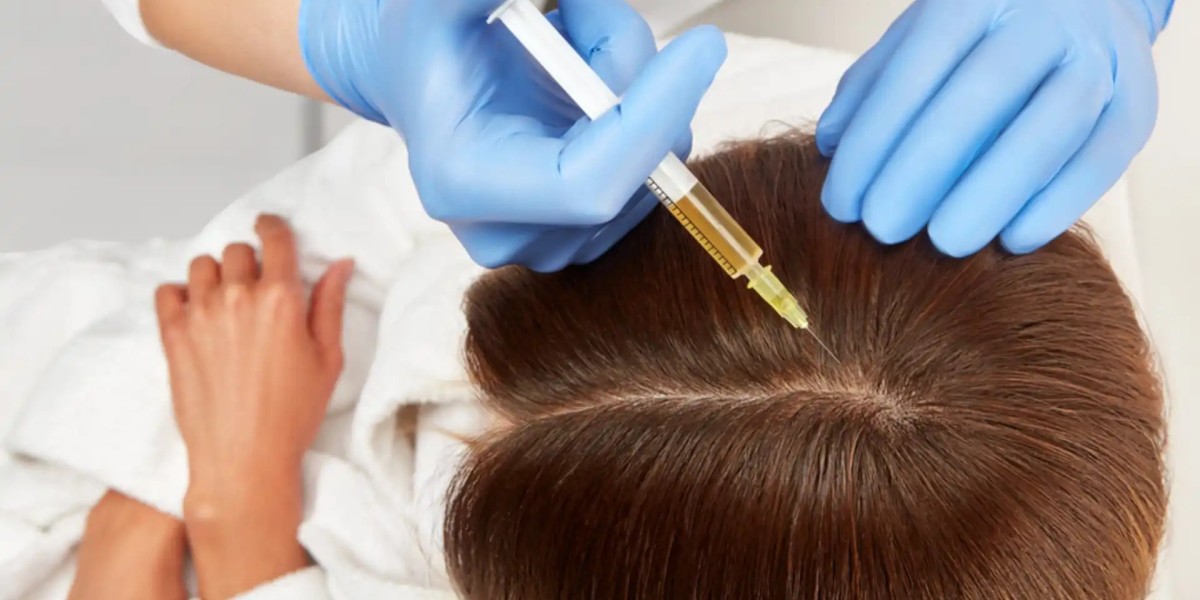

Hair thinning and excessive shedding can affect confidence and influence how people feel about their appearance. Modern aesthetic medicine offers different approaches to hair restoration, including platelet-rich plasma therapy, commonly known as PRP. PRP Hair Treatment in Dubai is a topic of interest for individuals exploring treatment options that use components of their own blood as part of a hair restoration plan. At Hortman Clinics, individuals can discuss their hair concerns, learn about available approaches, and understand why professional assessment is important before choosing a treatment.
What Is Platelet-Rich Plasma?
Platelet-rich plasma is a concentrated preparation made from a small sample of a person's blood. Platelets contain growth factors and other biological substances involved in the body's natural healing processes. In PRP hair treatment, the preparation is used in selected areas of the scalp with the aim of supporting hair growth and improving hair density.
The process generally involves collecting a blood sample and placing it in a centrifuge, which separates its components. The platelet-rich portion is then prepared for use according to the clinician's protocol. The exact preparation method can vary between systems and practitioners.
People researching PRP Hair Treatment in Dubai should understand that PRP is not a hair transplant. It does not involve surgically moving hair follicles from one area of the scalp to another. Instead, it is an injectable treatment intended to support hair restoration in suitable candidates.
How PRP May Support Hair Growth
Platelets release growth factors that participate in cellular communication and tissue repair. Researchers have investigated whether these biological signals can influence the scalp environment and support hair follicles affected by certain forms of hair loss.
Clinical studies suggest that PRP may improve hair density for some people, particularly those experiencing pattern hair loss. However, results vary, and research methods differ in how PRP is prepared, administered, and evaluated. This means that treatment outcomes cannot be guaranteed for every individual.
When considering PRP Hair Treatment in Dubai, it is important to understand that the treatment may be more appropriate for some causes of hair thinning than others. A professional assessment can help identify the likely cause of hair loss and determine whether PRP is a reasonable option. Other treatments may be recommended depending on the diagnosis and the person's needs.
Who May Consider PRP Hair Treatment?
PRP may be discussed with individuals experiencing early or moderate hair thinning, including certain cases of androgenetic alopecia, also known as pattern hair loss. People who still have active hair follicles in the affected areas may be considered for treatment following a clinical assessment.
However, not every type of hair loss responds in the same way. Hair shedding can be associated with genetics, hormonal changes, nutritional deficiencies, medical conditions, stress, or scalp disorders. Identifying the underlying cause helps guide appropriate care.
At Hortman Clinics, individuals can discuss their hair concerns and ask about assessment options. A clinician may review the pattern and duration of hair loss, relevant medical history, scalp condition, and previous treatments before discussing a suitable plan.
What Happens During a PRP Session?
A PRP session generally begins with a consultation and preparation of the treatment area. A small blood sample is collected and processed to separate the platelet-rich portion from other blood components. The prepared material is then administered into selected scalp areas using an appropriate technique.
The session length depends on the preparation system, treatment area, and clinical process. The practitioner should explain each stage beforehand so that the individual understands what to expect.
For people exploring PRP Hair Treatment in Dubai, it is helpful to ask how the PRP is prepared, which scalp areas will be treated, and how progress will be monitored. Understanding the process can make the consultation more productive and help establish realistic expectations.
Expected Results and Treatment Planning
PRP does not produce immediate hair growth. If a person responds to treatment, changes may develop gradually over several months. The timing and extent of improvement depend on the underlying cause of hair loss, the condition of the hair follicles, the treatment protocol, and individual biological factors.
Some individuals may notice reduced shedding or improved hair density, while others may experience limited change. Clinical research has shown promising results for certain hair loss conditions, but differences between studies mean that the effectiveness of a particular protocol remains difficult to predict precisely.
A treatment plan may involve an initial series of sessions followed by reassessment. Any maintenance schedule should be based on the clinician's recommendations and the individual's response rather than a fixed expectation.
At Hortman Clinics, individuals can discuss how progress may be evaluated and which outcomes are realistic for their particular concerns. Photographs or clinical scalp assessments may help compare changes over time.
Combining PRP With a Wider Hair Care Plan
Hair restoration often requires a broader approach than a single procedure. Depending on the diagnosis, a clinician may discuss approved medical treatments, scalp care, or investigations for underlying contributors to hair loss.
For example, a person experiencing persistent shedding may benefit from an assessment for nutritional or hormonal factors when clinically indicated. Someone with pattern hair loss may need to understand established treatment options alongside PRP.
When researching PRP Hair Treatment in Dubai, individuals should ask whether PRP is being recommended as a standalone approach or as part of a wider plan. Any combination should be based on professional advice and the individual's medical circumstances.
Maintaining realistic expectations is also important. PRP is intended to support hair restoration in selected cases; it cannot guarantee complete regrowth or recreate hair follicles that are no longer present.
Choosing a Qualified Provider
Choosing a qualified medical professional helps ensure that hair loss is assessed appropriately and that PRP is considered in the context of the individual's health and goals. Patients should ask about practitioner credentials, the preparation method, treatment protocols, and the process used to monitor progress.
A clear consultation should also explain what the treatment can reasonably achieve and whether alternative approaches may be more suitable. Individuals should have enough information to make a considered decision without feeling pressured to proceed.
At Hortman Clinics, prospective patients can discuss their concerns and ask questions about the consultation process. Understanding the recommended plan, follow-up arrangements, and expected timeline can help individuals make informed choices about hair restoration.
Understanding PRP Hair Treatment Cost in Dubai
People researching hair restoration often want to understand the factors involved in choosing a treatment plan. PRP Hair Treatment cost in Dubai is one phrase individuals may search when comparing available options, but the details of the proposed treatment matter as much as the general description.
The overall plan may depend on the number of recommended sessions, the preparation method, the extent of the treatment area, the clinician's assessment, and the follow-up arrangements. Different protocols may not be directly comparable, so it is useful to understand what each plan includes.
When discussing PRP Hair Treatment cost in Dubai, individuals can ask for a clear explanation of the proposed sessions, the preparation process, and the care provided during follow-up. This helps them understand the service being considered without relying on assumptions.
At Hortman Clinics, a consultation can provide an opportunity to discuss hair restoration goals and clarify the details of a proposed treatment plan before making a decision.
Conclusion
Platelet-rich plasma is an evolving option in hair restoration that uses a concentrated preparation derived from a person's own blood. PRP Hair Treatment in Dubai may be considered by individuals experiencing certain types of hair thinning, particularly when active follicles remain. A professional assessment is essential to identify the cause of hair loss, determine suitability, and explain realistic expectations. Hortman Clinics can help individuals discuss their concerns and learn about the consultation process. Understanding PRP Hair Treatment cost in Dubai as part of an individualized treatment discussion can also clarify the proposed plan and follow-up arrangements. With accurate information and personalized guidance, individuals can make better-informed decisions about their hair care options.
FAQs
1. What is PRP Hair Treatment in Dubai?
PRP Hair Treatment in Dubai uses a concentrated portion of the patient's blood, containing platelets, which is administered into selected scalp areas to support hair restoration in suitable candidates.
2. How does platelet-rich plasma work for hair thinning?
Platelets release growth factors involved in biological repair processes. Researchers believe these signals may help support the scalp environment and hair density in some people, although individual results vary.
3. How long does PRP take to show results?
Any improvement generally develops gradually over several months. The timeline depends on the cause of hair loss, the treatment protocol, and the individual's response.
4. Is PRP suitable for every type of hair loss?
No. PRP may be considered for selected conditions, including certain cases of pattern hair loss. A medical assessment is needed to identify the cause of shedding and determine appropriate treatment options.
5. What influences PRP Hair Treatment cost in Dubai?
PRP Hair Treatment cost in Dubai depends on the proposed treatment plan, recommended sessions, preparation method, treatment area, and follow-up arrangements. A consultation can clarify the details relevant to the individual.