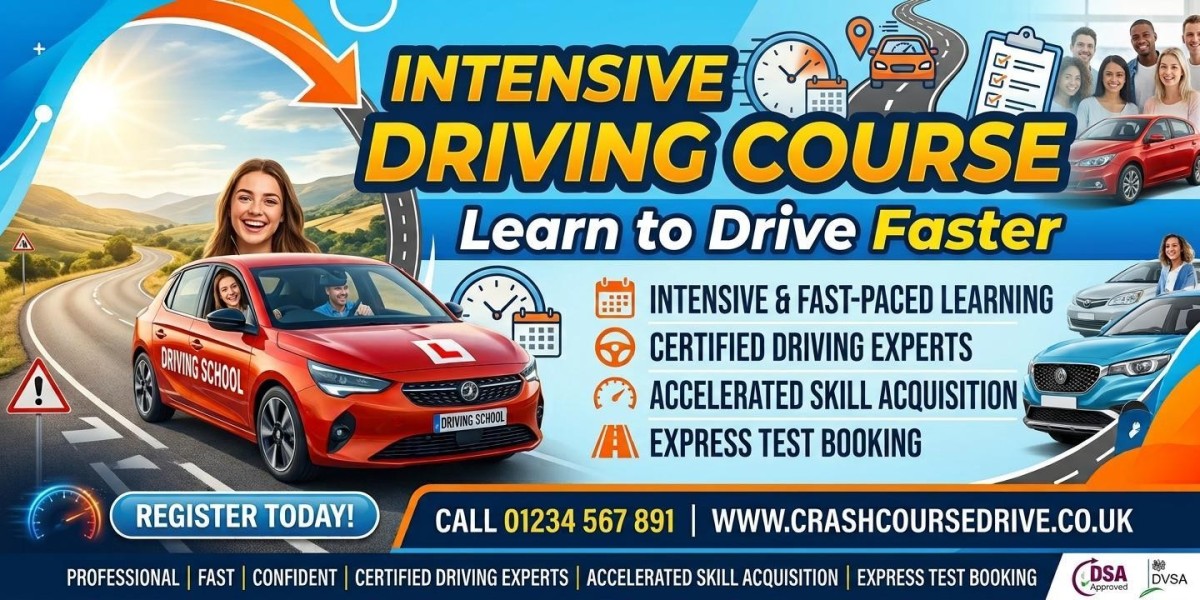

Intensive Driving Course: A Complete Guide to Learning to Drive Faster
Introduction
Learning to drive is an important milestone that brings greater independence, convenience, and flexibility to everyday life. Whether you want to travel to work, attend university, manage family responsibilities, or explore new opportunities, having a driving licence can make daily journeys easier. However, traditional driving lessons can take several months to complete, especially when lessons are scheduled only once or twice a week. An intensive driving course provides an alternative for learners who want to develop their driving skills through concentrated, structured training.
An intensive driving course brings multiple hours of practical instruction together over a shorter period. Instead of leaving long gaps between lessons, learners can practise regularly, receive consistent feedback, and build on their progress from one session to the next. Depending on previous experience and individual learning ability, some people may become test-ready relatively quickly, while others may require additional instruction.
The purpose of intensive driving lessons is not simply to learn within a limited timeframe. The real objective is to develop safe driving habits, improve confidence, understand road rules, and prepare for independent driving.
What Is an Intensive Driving Course?
An intensive driving course is a structured training programme that allows learners to complete their driving lessons over a shorter period than conventional weekly instruction. Lessons may take place on consecutive days or follow a concentrated schedule designed around the learner's availability.
The number of hours required depends on the learner's experience, confidence, and ability to apply new skills. Complete beginners may need comprehensive training in vehicle controls, road positioning, junctions, manoeuvres, and hazard awareness. Learners who have already completed several lessons may benefit from a shorter course focused on correcting mistakes and improving specific driving techniques.
Some intensive programmes also provide practical test preparation and guidance on test arrangements. However, the services included vary between providers, so learners should confirm the course structure, total lesson hours, and any additional charges before booking.
An effective intensive course combines regular practice with constructive feedback, ensuring that learners develop the skills required for safe and responsible driving.
Who Can Benefit from an Intensive Driving Course?
Complete Beginners
An intensive driving course can be suitable for people who are starting their driving journey and prefer a concentrated learning schedule. Initial lessons usually cover vehicle controls, steering, moving off, stopping, and basic road awareness.
As learners become more comfortable, they can progress towards junctions, roundabouts, parking manoeuvres, and busier roads. The instructor gradually introduces more challenging situations according to the learner's ability.
However, beginners should have realistic expectations. Learning to drive involves developing coordination, judgement, and awareness, and not everyone will reach the required standard within a few days.
Learners with Previous Driving Experience
People who have already taken driving lessons may benefit from intensive training because they can build on their existing knowledge. They may understand the basic controls but need further practice with observation, positioning, manoeuvres, or independent driving.
A concentrated programme allows learners to revisit difficult situations and apply feedback immediately. This can make their training more focused and help them identify recurring mistakes that need attention.
Learners Preparing for a Driving Test
An intensive course may also be appropriate for learners who are approaching their practical test and want to improve their readiness. Lessons can focus on test-related skills, including safe manoeuvres, mirror checks, hazard awareness, road positioning, and independent decision-making.
Mock tests can help learners understand their current ability and identify areas that need improvement. Nevertheless, completing an intensive course does not guarantee a driving test pass. Learners should take their test only when they can demonstrate safe and consistent driving.
What Will You Learn During an Intensive Driving Course?
Vehicle Controls and Basic Techniques
The first stage of driving instruction involves understanding how to operate the vehicle safely. Learners practise using the accelerator, brake, steering wheel, indicators, mirrors, and gears where applicable. They also learn how to adjust the seat and mirrors before starting a journey.
For manual cars, clutch control and gear selection are important skills. Automatic cars remove the need for manual gear changes, but learners must still develop smooth braking, steering, observation, and speed control.
Regular practice helps learners become more familiar with the vehicle and allows them to concentrate increasingly on the road environment.
Road Positioning and Junctions
Correct road positioning helps drivers maintain safe distances from other vehicles, cyclists, pedestrians, and roadside obstacles. During lessons, learners practise selecting appropriate positions, responding to road markings, and adjusting their approach to different road layouts.
Junctions require careful observation and sound judgement. Learners develop the ability to check mirrors, assess traffic, choose appropriate speeds, and decide when it is safe to proceed.
These skills are essential because drivers must make decisions based on actual road conditions rather than relying entirely on memorised instructions.
Roundabouts and Busy Roads
Roundabouts can be challenging for new drivers because they require awareness of surrounding traffic, correct positioning, and timely decisions. Intensive lessons provide opportunities to practise these situations repeatedly under an instructor's supervision.
Learners may also practise driving through traffic lights, residential streets, busy urban roads, and areas with complex layouts. As their confidence develops, they learn to anticipate the actions of other road users and respond calmly to changing conditions.
Parking and Reversing Manoeuvres
Parking and reversing are important components of practical driving instruction. Depending on individual needs, learners may practise parallel parking, reversing into a parking bay, and other manoeuvres required for the practical test.
The focus should remain on safe observation, appropriate positioning, and vehicle control. Learners need to check their surroundings, monitor blind spots, and respond to pedestrians or vehicles that may enter the area.
Consistent practice helps make these manoeuvres easier to manage and improves overall confidence.
Hazard Awareness and Independent Driving
Safe driving involves recognising potential dangers before they become immediate threats. Learners practise identifying hazards, anticipating the behaviour of other road users, and adjusting their driving to suit changing circumstances.
Independent driving is another essential skill. It helps learners follow road signs or directions while making their own decisions about speed, positioning, and safety.
Developing these abilities supports practical test preparation and helps learners become more responsible drivers after obtaining their licence.
How Does an Intensive Driving Course Work?
Initial Assessment and Planning
A suitable course begins with an assessment of the learner's existing skills and experience. The instructor may discuss previous lessons, confidence levels, and areas that require additional practice.
This information helps determine the appropriate number of lesson hours and the pace of instruction. Choosing a course based on actual ability is more effective than selecting the shortest programme simply to finish quickly.
Concentrated Practical Lessons
The main stage involves regular driving sessions over a shorter period. Learners can practise techniques introduced during earlier lessons and receive feedback while their experience remains fresh.
The instructor can adapt the programme as progress develops, giving additional attention to difficult areas. Breaks and manageable lesson durations are important because driving requires sustained concentration and decision-making.
Progress Reviews and Mock Tests
As learners improve, lessons can focus increasingly on independent driving and practical test preparation. Mock tests provide an opportunity to assess driving performance in conditions similar to those encountered during the real examination.
Feedback helps learners understand which skills are developing well and which require further practice. This can reduce uncertainty and provide a clearer picture of test readiness.
Preparing for the Practical Test
The final stage may involve revising manoeuvres, practising unfamiliar roads, and addressing recurring mistakes. Learners should also understand the documents and arrangements required on test day.
The practical test must be booked and managed in accordance with current official requirements. Test availability may not align perfectly with the course timetable, so learners should confirm arrangements before committing to a particular schedule.
Benefits of Choosing an Intensive Driving Course
Faster and More Consistent Progress
One of the main advantages of intensive driving lessons is continuity. Learners can practise regularly without long gaps between sessions, helping them remember techniques and apply feedback more effectively.
This approach can be especially beneficial for people who prefer learning through repetition and practical experience. Regular lessons also allow instructors to identify recurring mistakes and address them before they become established habits.
Convenient for Busy Schedules
An intensive driving course can suit students, professionals, and people with upcoming commitments who want to concentrate their lessons within a shorter period. Instead of organising weekly lessons over several months, learners can plan their training around a dedicated block of time.
However, it is important to ensure that the schedule allows enough time for rest, revision, and other responsibilities.
Personalised Instruction
A well-planned intensive programme can be adapted to the learner's individual needs. Someone who struggles with roundabouts may require additional practice in those situations, while another learner may need to focus on parking or independent driving.
Personalised feedback makes each lesson more purposeful and helps learners understand how to improve their performance.
Greater Confidence Behind the Wheel
Confidence develops through experience and a clear understanding of driving techniques. Regular practice can help learners become more comfortable with vehicle controls, traffic conditions, and unexpected situations.
As learners improve, they can gradually take greater responsibility for their driving decisions. This process encourages confidence based on practical ability rather than simply completing a fixed number of lessons.
How to Choose the Right Intensive Driving Course
Selecting the right course requires consideration of the training structure, instructor qualifications, total lesson hours, and overall cost.
Learners should ask whether the programme is designed for complete beginners, intermediate learners, or people preparing for a practical test. They should also check whether the instructor adapts lessons according to progress and whether additional training is available if required.
It is important to understand exactly what the course fee includes. Practical test fees, additional lessons, and other services may be charged separately. Checking these details before booking helps avoid unexpected expenses.
Choosing a suitable instructor is equally important. In Great Britain, paid driving instruction must be provided by a qualified approved driving instructor or an eligible trainee instructor. Learners should look for someone who explains techniques clearly, provides constructive feedback, and prioritises road safety.
The best course is one that matches your learning needs and helps you develop lasting driving skills.
Is an Intensive Driving Course Suitable for Everyone?
Although intensive driving courses offer several advantages, they are not the ideal option for every learner. Some people respond well to concentrated instruction, while others need more time to process information and develop confidence.
Driving for several hours can be mentally demanding, particularly for beginners who are still learning to coordinate vehicle controls and observe traffic. Fatigue may affect concentration, so the training schedule should remain manageable.
Learners should also avoid feeling pressured to pass a test simply because they have booked an intensive programme. If additional practice is needed, taking more lessons is a sensible decision.
The priority should always be safe, independent driving. A responsible instructor will help assess progress and advise when further training may be beneficial.
How to Prepare for Your Intensive Driving Lessons
Preparing before the course begins can make the learning experience more productive. Learners should ensure they hold a valid provisional driving licence and meet the relevant legal requirements for driving lessons.
Studying the Highway Code and familiarising yourself with road signs can make practical instruction easier to understand. Preparing for the theory test in advance is also useful, particularly if you intend to complete your practical training soon afterwards.
Getting enough sleep, arriving on time, and remaining focused during lessons can support better progress. Comfortable footwear that allows you to operate the pedals properly is also helpful.
Most importantly, communicate openly with your instructor about your experience and any difficulties you encounter. Being honest about areas of uncertainty allows the training programme to be adjusted to your needs.
Conclusion
An intensive driving course offers a structured way to develop essential driving skills within a shorter period. Through consistent practice, personalised instruction, and regular feedback, learners can improve vehicle control, road awareness, manoeuvres, and confidence.
The most suitable course depends on your previous experience, learning style, schedule, and individual progress. While some learners may become test-ready quickly, others will need additional lessons to reach the required standard.
By choosing an appropriate programme and prioritising safety over speed, you can make meaningful progress towards becoming a competent, confident, and responsible driver.
Frequently Asked Questions
What is an intensive driving course?
An intensive driving course is a programme that combines multiple driving lessons over a relatively short period. It allows learners to develop their skills through regular practice rather than spreading lessons across several months.
How long does an intensive driving course take?
The duration varies according to the course structure and the learner's ability. Some programmes last a few days, while others run for one or two weeks or longer. The number of hours needed depends on previous experience and progress.
Can a complete beginner take an intensive driving course?
Yes, many intensive courses accommodate beginners. However, learners who have never driven before may require more instruction to develop vehicle control, observation, and decision-making skills. Additional lessons may be necessary.
Can I pass my driving test after an intensive course?
Yes, some learners become ready for their practical test after intensive training. However, passing is not guaranteed. Your result depends on your driving ability, preparation, judgement, and performance during the examination.
How many hours of driving lessons will I need?
The required number of hours differs between learners. Someone with previous experience may need fewer lessons than a complete beginner. An instructor can assess your current ability and recommend a suitable training schedule.
Is an intensive driving course better than weekly lessons?
Intensive courses offer continuity and concentrated practice, while weekly lessons provide more time to reflect between sessions. The better option depends on your learning preferences, availability, experience, and budget.
Do I need to pass my theory test before starting an intensive course?
You can generally begin practical driving lessons before passing your theory test, provided you meet the legal requirements for learning to drive. However, you must pass the theory test before booking your practical driving test in Great Britain.
Does an intensive driving course include the practical test?
This depends on the provider and the package. Some courses offer assistance with test preparation and arrangements, while others include lessons only. Confirm what is included before booking and check the current official rules for managing practical test bookings.
Can I choose between manual and automatic driving lessons?
Many providers offer manual and automatic instruction, although availability varies. Your choice should depend on your preferences and the type of vehicle you intend to drive after passing your test.
What happens if I am not ready to drive independently after the course?
If you need additional practice, you can discuss further lessons with your instructor. Taking more time to improve your skills is preferable to attempting a practical test before you are ready.
Are intensive driving courses worth the money?
An intensive course can offer good value if you benefit from concentrated instruction and can commit to the schedule. Compare the total lesson hours, instructor support, additional charges, and potential need for further training before making your decision.







