
Introduction
Businesses invest in digital advertising to attract customers, increase sales, and grow revenue. However, spending money on ads does not always guarantee positive results. Marketers need to measure campaign performance to understand whether their investment is delivering value. Learning to calculate ROAS helps businesses compare advertising costs with the revenue generated by their campaigns. With accurate tracking and regular analysis, companies can make better decisions about their marketing budgets. RoasCalculate offers a practical approach to understanding advertising returns and improving campaign measurement.
What Is ROAS in Marketing?
ROAS in Marketing stands for Return on Ad Spend. It measures how much revenue a business generates for every dollar spent on advertising. This metric helps marketers evaluate campaigns across platforms such as Google Ads, Facebook Ads, Instagram Ads, and other paid advertising channels.
For example, if a company spends $500 on advertising and generates $2,000 in revenue from those ads, its ROAS is 4:1. This means the campaign generates $4 in revenue for every $1 spent on advertising.
ROAS is useful because it gives marketers a straightforward way to compare campaign performance. A campaign generating more revenue from the same advertising budget may be performing better than one with lower returns. However, businesses should also consider product costs, shipping, employee expenses, and other operating costs before deciding whether a campaign is profitable.
Understanding the ROAS Formula
The ROAS Formula is simple and easy to apply to different advertising campaigns.
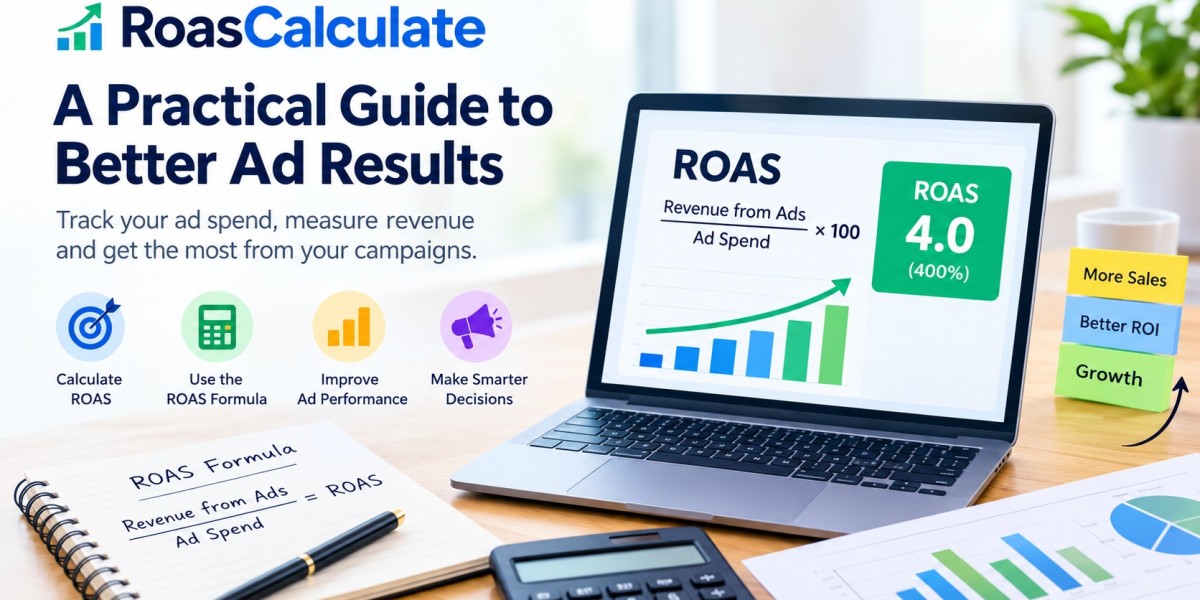
ROAS = Revenue from Advertising ÷ Advertising Cost
The result is usually expressed as a ratio or multiple.
Consider a business that spends $1,200 on a digital advertising campaign and generates $4,800 in attributed revenue.
ROAS = $4,800 ÷ $1,200 = 4
The campaign has a 4:1 ROAS, meaning it generates $4 in revenue for every $1 spent on ads.
Marketers can also express this result as a percentage by multiplying the ratio by 100. In this example, the ROAS is 400%.
It is important to remember that ROAS measures revenue rather than profit. A campaign can generate substantial revenue while still losing money if the cost of producing and delivering products is too high.
How to Calculate ROAS for Your Campaigns
To calculate ROAS accurately, businesses should follow a consistent process.
1. Identify Your Advertising Costs
Start by determining how much you spent on the campaign during a specific period. Include the relevant advertising platform charges and decide whether additional campaign management or creative costs should be included in your analysis.
Using a consistent cost definition makes comparisons more meaningful.
2. Track Revenue from Ads
Next, identify the revenue attributed to the advertising campaign. Advertising dashboards, website analytics, and ecommerce reports can help connect purchases with specific campaigns.
Make sure conversion tracking is configured correctly. If purchases are missing or duplicated, your ROAS calculation may not reflect actual performance.
3. Apply the Formula
Divide attributed revenue by advertising cost. For example, a campaign that spends $800 and generates $3,200 in attributed sales has a ROAS of 4:1.
Repeat this process for different campaigns to identify which ones deliver stronger returns.
4. Compare Results Over Time
Review performance across days, weeks, and months. A single day of strong sales does not necessarily indicate sustainable performance. Longer reporting periods can help reveal trends, seasonal changes, and opportunities to improve results.
Using RoasCalculate to Improve Ad Performance
Using RoasCalculate as part of a regular reporting routine can help marketers focus on measurable results instead of assumptions. A ROAS calculator can simplify calculations, reduce manual errors, and make it easier to compare advertising investments.
For example, imagine an online store runs two campaigns. Campaign A spends $600 and generates $2,400 in attributed revenue, while Campaign B spends $900 and generates $2,700.
Campaign A delivers a 4:1 ROAS, while Campaign B delivers a 3:1 ROAS. Although Campaign B generates more total revenue, Campaign A produces more revenue per advertising dollar.
This comparison helps the business decide where to investigate performance, adjust budgets, or test new advertising strategies. However, marketers should also compare conversion rates, customer acquisition costs, and profit margins before moving the entire budget to one campaign.
How an Ad Spend Calculator Supports Better Decisions
An ad spend calculator helps businesses estimate budgets, compare spending scenarios, and understand the revenue required to reach a target ROAS.
Suppose a company plans to spend $2,000 on advertising and wants to achieve a 3:1 ROAS. It would need to generate $6,000 in attributed revenue to reach that target.
This estimate can support campaign planning and performance reviews. Businesses can also work backward from a revenue goal to estimate the advertising budget required, provided their expected ROAS is realistic.
These calculations are useful for setting targets, but forecasts should be based on historical campaign results and current market conditions rather than assumptions alone.
Common Mistakes to Avoid When Measuring ROAS
Several mistakes can lead to inaccurate campaign decisions.
First, avoid treating revenue as profit. Product costs, fulfillment expenses, discounts, and other business costs affect the final financial outcome.
Second, do not compare campaigns using inconsistent attribution settings or reporting periods. Different attribution windows can produce different revenue figures.
Third, avoid making major budget changes based on limited data. Allow campaigns enough time to collect meaningful results, while monitoring spending closely.
Finally, review the quality of conversions. Repeat purchases, refunds, and low-value orders can influence how useful a reported ROAS figure is for long-term planning.
Practical Ways to Improve Advertising ROI
Businesses can improve advertising performance by testing different headlines, images, offers, and landing pages. Small changes may improve click-through rates or conversions, but results should be measured rather than assumed.
Audience targeting is another important factor. Focus on groups that are more likely to purchase, and review whether campaigns attract relevant visitors instead of simply generating clicks.
Regularly pause or revise underperforming ads when sufficient data supports the decision. At the same time, monitor profitable campaigns to identify opportunities for controlled scaling.
Most importantly, connect advertising metrics with business goals. Revenue growth, customer retention, profit margins, and acquisition costs should all contribute to decisions about advertising investment.
Conclusion
Measuring advertising performance helps businesses use their budgets more effectively. By understanding the ROAS Formula, tracking attributed revenue, and reviewing campaign costs, marketers can identify opportunities to improve results. Learning to calculate ROAS is a useful starting point, but profitability requires a broader view of business expenses and customer value. RoasCalculate can support a consistent measurement process that helps businesses evaluate campaigns, plan spending, and make informed advertising decisions.
Frequently Asked Questions
1. What does ROAS mean?
ROAS means Return on Ad Spend. It measures the revenue generated for every unit of money spent on advertising.
2. How do you calculate ROAS?
Divide the revenue attributed to advertising by the total advertising cost for the same reporting period.
3. What is a good ROAS?
A good ROAS depends on profit margins, operating expenses, industry conditions, and business objectives. There is no single target that suits every company.
4. Is ROAS the same as ROI?
No. ROAS compares advertising revenue with advertising costs, while ROI evaluates the return relative to the broader investment and associated costs.
5. Can a ROAS calculator help small businesses?
Yes. It helps small businesses calculate advertising returns, compare campaigns, estimate revenue targets, and make more informed budget decisions.