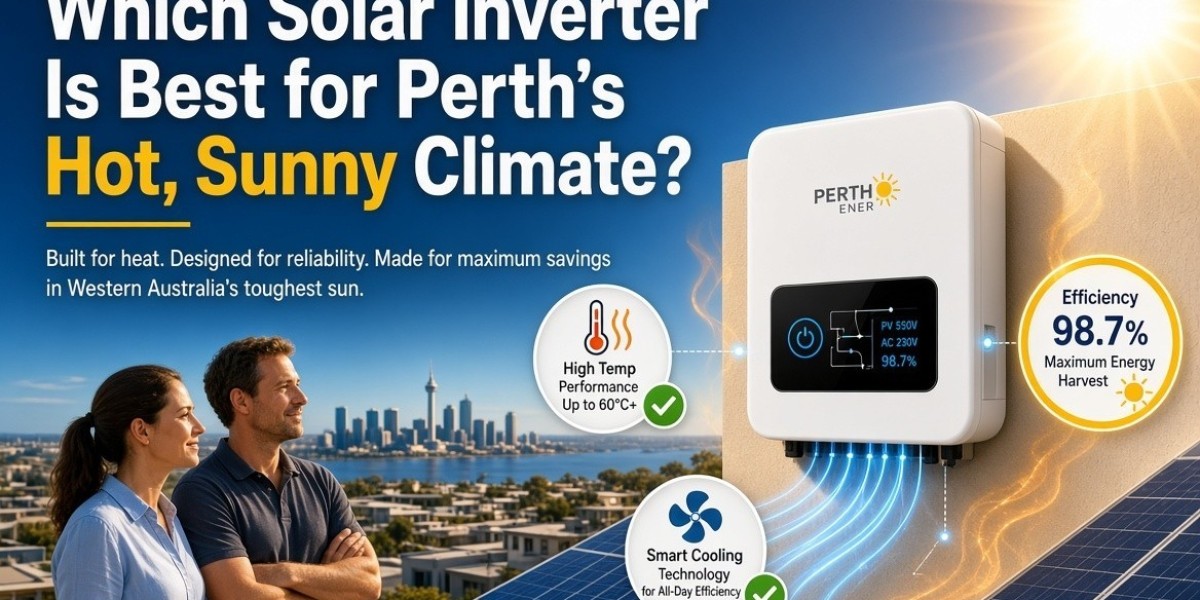

Perth is well suited to solar energy, with abundant sunshine throughout much of the year. However, hot summer days can create an important challenge for homeowners: choosing a solar inverter that can perform reliably when temperatures rise.
Solar panels receive the sunlight, but the inverter converts the electricity they generate into power your home can use. If the inverter overheats or is installed in a poorly ventilated location, it may reduce its output to protect itself. Over time, unsuitable equipment placement and inadequate installation can also affect reliability.
So, which solar inverter is best for Perth’s hot, sunny climate? The answer depends on your roof design, household electricity use, budget and plans for a solar battery. This guide explains the main inverter types, what to look for in hot weather and how Perth homeowners can make a more informed decision.
1. How Does Perth’s Hot Climate Affect Solar Inverters?
Solar panels can generate substantial electricity on sunny days, but more heat does not automatically mean more power. Solar panels generally become less efficient as their temperature rises, and inverters also have operating temperature limits.
When an inverter gets too hot, some models reduce their output to protect their internal components. This is commonly called temperature derating. The amount of output reduction depends on the specific model, operating conditions and installation.
For Perth homeowners, this means selecting an inverter based only on its price or advertised efficiency may not be enough.
Look for an inverter with:
· A clearly documented operating temperature range.
· Published performance information at elevated temperatures.
· Effective cooling and heat-management features.
· A suitable outdoor rating for the intended installation location.
· A strong Australian warranty and accessible local support.
An inverter designed for outdoor installation can still benefit from protection against direct afternoon sunlight. Its location and ventilation matter just as much as its specifications.
2. Which Type of Solar Inverter Is Best for Perth?
Different inverter designs suit different homes. Here is how the main options compare.
String inverters: A practical choice for many homes
A string inverter connects several solar panels to a central unit, usually mounted on a wall near the switchboard.
Best suited to: Homes with a relatively straightforward roof layout and limited shading.
Advantages include a generally lower upfront cost, straightforward maintenance and broad availability. However, the performance of panels connected together can be affected when one panel experiences significant shade or operates under different conditions.
For many Perth homes with a suitable roof and consistent sunlight, a well-specified string inverter can be an economical choice. Choose a model with appropriate heat-management specifications and install it in a shaded, well-ventilated location where possible.
Microinverters: Useful for complex roofs
Microinverters are installed at individual panels, allowing each panel to operate more independently.
Best suited to: Homes with multiple roof directions, partial shading or layouts where panel-level monitoring is valuable.
They can help reduce the impact of shading on other panels, but they do not eliminate the effects of heat on solar panels themselves. Roof-mounted electronics also need to be suitable for the temperatures and conditions where they will operate.
Microinverters may cost more upfront, so compare the potential performance benefits with the additional installation cost.
Hybrid inverters: Worth considering if you want a battery
A hybrid inverter can manage solar generation and a compatible battery within one system.
Best suited to: Households planning to store excess daytime solar energy for evening use.
If you expect to add a battery later, a hybrid inverter may simplify your future system design. However, battery compatibility, available backup power, installation costs and the inverter's operating limits should all be checked before purchasing.
A hybrid inverter is not automatically more heat-resistant than a string inverter. Its suitability for Perth depends on the specific model and installation.
3. What Specifications Matter Most in Hot Weather?
When comparing solar inverters, focus on practical performance rather than technical figures alone.
Operating temperature range: Check the manufacturer's published temperature limits. An inverter's maximum permitted temperature does not necessarily mean it will maintain full output at that temperature.
Temperature derating information: Ask how the inverter performs as its operating temperature rises. If the manufacturer publishes a derating curve, use it to compare models under similar conditions.
Cooling design: Different models use natural convection, fans or other cooling arrangements. Fan-cooled equipment may need maintenance, while fanless designs still require suitable airflow and installation clearances.
Conversion efficiency: This measures how effectively an inverter converts electricity from the panels into usable household power. Compare the manufacturer's efficiency figures, but remember that real-world results also depend on temperature, system design and operating conditions.
Warranty and local support: Check the warranty duration, coverage terms, Australian service arrangements and availability of replacement equipment. A reliable support process can matter when a fault occurs during a hot summer.
4. Where Should Your Inverter Be Installed?
In Perth, installation location can make a meaningful difference to inverter operating conditions.
Whenever practical, an installer should consider a shaded wall or a position protected from intense afternoon sun. The inverter must still have the clearances and airflow required by its manufacturer.
Avoid placing it in a tightly enclosed space, directly beside another heat-producing appliance or somewhere that makes servicing difficult. If outdoor installation is necessary, check the unit's weather-protection rating and follow the manufacturer's mounting instructions.
Your installer should also consider nearby windows, ventilation openings, coastal exposure where relevant and the distance from the switchboard.
A suitable location helps the inverter manage heat, but it cannot compensate for a model that is poorly matched to the system.
5. A Perth Homeowner Example: Choosing Between Two Options
Consider a hypothetical homeowner in Perth who wants solar panels on a north-facing roof and expects to use more electricity in the evening.
The homeowner compares two proposals:
· Option A: A standard string inverter with a lower upfront price, installed on a shaded, ventilated wall.
· Option B: A hybrid inverter with battery compatibility and additional features, at a higher initial cost.
If the household does not expect to install a battery, Option A may offer better value, provided it meets the home's electrical requirements and expected generation needs.
If the homeowner plans to install a battery soon, Option B may be worth considering. The extra cost should be compared with the expense of alternative battery configurations and any future inverter replacement.
This example illustrates a decision-making approach rather than a documented customer installation or a guarantee of savings. Actual results depend on equipment specifications, roof conditions, tariffs and household consumption.
6. Perth’s Solar Inverter Rules: What Homeowners Should Know
Solar inverters installed in Western Australia must comply with applicable Australian standards and electricity network requirements.
From 1 May 2026, new and upgraded solar and battery systems covered by Western Australia's updated requirements must meet the relevant inverter standard, including AS/NZS 4777.2:2020 with the applicable amendment and Australian Region B settings.
Under the new framework, standard-connection homes and small businesses can generally install up to 30 kVA of aggregate inverter capacity, subject to the applicable requirements. Systems must also support the required remote disconnection and reconnection arrangements or meet the specified export-limit alternative.
These requirements do not mean every existing solar inverter must automatically be replaced. Your installer should confirm how the rules apply to your particular installation and whether network approval or other connection conditions are required.
Before signing a contract, check the proposed inverter on the Clean Energy Council's approved inverter list. The list and applicable requirements can change, so confirm the exact model and approval status at the time of purchase.
For further guidance, consult the WA Government's solar and battery requirements.
7. How to Choose the Right Inverter for Your Home
Before accepting a solar quote, ask your installer these questions:
1. Is this inverter suitable for Perth's summer operating conditions?
2. How much output could it lose at high operating temperatures?
3. Where will it be installed, and how will airflow and shade be managed?
4. Is it compatible with my proposed panel layout and system size?
5. Can it support a battery if my needs change?
6. What are the warranty terms and local service arrangements?
7. Does the exact model meet current approval and network requirements?
Compare at least two itemised quotes. Consider the full installed cost, expected system performance, warranty coverage and long-term flexibility rather than choosing the cheapest inverter alone.
Conclusion: Find the Best Solar Inverter for Perth’s Climate
The best solar inverter for Perth is not necessarily the most expensive or the one with the longest list of features. It is the model that suits your roof, handles the expected operating conditions, meets local requirements and provides reliable value over time.
For many homes, a properly sized string inverter may be sufficient. Micro inverters can suit more complex roofs, while a hybrid inverter may be appropriate for households planning to add battery storage.
The most important steps are to compare real specifications, plan the installation location carefully and confirm the inverter's approval status before purchasing.
If you are researching solar inverters in Perth, visit Solar 365's solar inverter guide to explore the factors involved in choosing an inverter for your home. An informed choice can help you make better use of Perth's sunshine while balancing upfront costs and long-term performance.