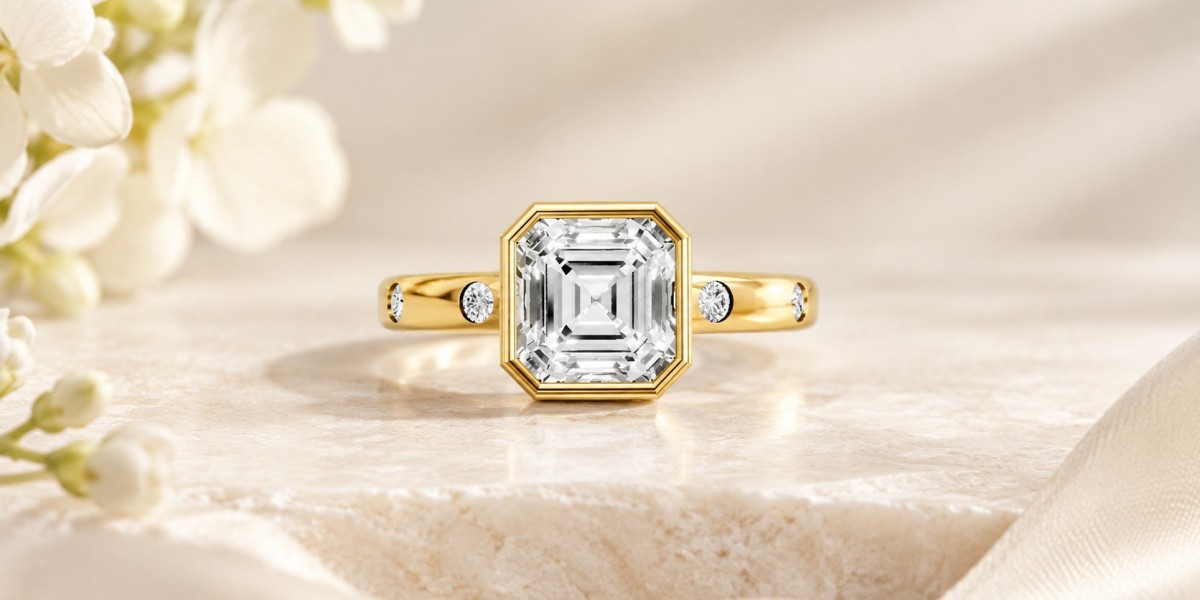

Choosing an engagement ring is about finding a design that feels right for your style, daily routine, and personal taste. Bezel engagement rings have become a popular choice for people who want a clean setting with a secure feel. Instead of holding the center stone with individual prongs, a bezel setting uses a thin metal rim around the stone to keep it in place.
This setting works with different diamond shapes, metals, and band designs, making it easy to find a ring that suits a wide range of preferences. From simple solitaires to detailed halo designs, bezel rings offer plenty of ways to personalize an engagement ring.
If you prefer a ring that looks neat and feels practical for everyday wear, a bezel setting may be worth considering.
What Is a Bezel Setting?
A bezel setting holds a gemstone with a metal rim that surrounds some or all of its outer edge. The rim sits around the stone and helps keep it securely positioned within the setting.
Unlike prong settings, where small metal claws hold the diamond from several points, the bezel creates a continuous border around the stone. This gives the ring a distinctive outline while also adding a layer of protection around the diamond.
Bezels can be designed as full bezels or partial bezels. A full bezel surrounds the entire perimeter of the stone, while a partial bezel leaves some areas open. The choice depends on the look you want and the shape of the diamond.
1. Classic Bezel Solitaire Engagement Ring
The solitaire is one of the simplest engagement ring designs, and pairing it with a bezel setting creates a clean, structured appearance.
A bezel solitaire engagement ring places the main diamond at the center without additional side stones competing for attention. The metal rim outlines the stone and gives the ring a defined shape.
This style can work particularly well for someone who prefers a simple ring that can be worn every day. You can also choose between different diamond shapes, including round, oval, emerald, pear, and cushion cuts.
For a more traditional appearance, a round diamond with a smooth bezel can be paired with a plain band. If you want something slightly different, an oval or emerald-cut center stone can create a longer visual line across the finger.
2. Bezel Set Rings With a Plain Band
Sometimes the band is just as important as the center stone. A plain metal band keeps the focus on the bezel-set diamond while creating a straightforward overall design.
Gold, platinum, and other jewelry metals can be used depending on your preferred color and budget. Yellow gold creates a warm contrast with a white diamond, while white gold or platinum gives the ring a more consistent appearance.
A plain band is also practical for those who want a ring that can be paired easily with other jewelry.
When choosing this style, pay attention to the width of the band. A thin band creates a lighter appearance, while a wider band can give the ring a stronger presence.
3. Bezel Diamond Engagement Ring With Side Stones
A bezel does not have to mean choosing a single center diamond. Side stones can be added along the band or near the center setting for extra detail.
A bezel diamond engagement ring with side stones can feature small round diamonds, baguettes, or other shapes. The side stones can be set individually or incorporated into a continuous design.
This style is useful if you want a ring with more visual detail while still keeping the center stone securely surrounded by metal.
For a balanced design, consider choosing side stones that complement the shape of the center diamond. For example, an elongated oval center can work well with smaller diamonds placed along the band.
4. Oval Bezel Engagement Rings
Oval diamonds are a popular choice for bezel settings because their elongated shape can create a flattering line on the finger.
An oval bezel setting can be designed horizontally or vertically. A traditional vertical orientation places the longer side of the diamond toward the fingertip, while an east-west orientation places the stone across the finger.
An oval bezel can also be combined with a plain band, pavé details, or small accent stones.
If you are looking for something distinctive without choosing a highly complicated setting, an oval bezel may provide a good balance between individuality and simplicity.
5. East-West Bezel Engagement Rings
For those who want something outside the usual arrangement, an east-west bezel setting is worth considering.
Instead of positioning an elongated stone vertically, the diamond is placed horizontally across the band. This design can work especially well with oval, emerald, marquise, and other elongated shapes.
The bezel follows the outline of the stone, creating a strong horizontal line across the ring.
East-west designs can also be paired with a plain band for a simple look or combined with small accent stones for additional detail.
This is one of the more distinctive options for anyone searching for unique bezel engagement rings.
6. Bezel Halo Engagement Rings
A halo design surrounds the center diamond with smaller stones. When combined with a bezel center, the result brings two different design elements together.
The center diamond is protected by the bezel, while the surrounding halo creates a broader outline around the main stone.
A bezel halo can be designed with round accent diamonds or with stones that follow the shape of the center diamond. For example, an oval center can have an oval-shaped halo, while a cushion center can be surrounded by a cushion outline.
The size of the halo also affects the overall appearance. A narrow halo keeps the design relatively compact, while a larger halo creates a wider profile.
7. Partial Bezel Engagement Rings
A full bezel is not the only option. A partial bezel uses metal around selected areas of the diamond while leaving other portions more exposed.
This approach can create a lighter visual effect while still incorporating the distinctive structure of a bezel setting.
Partial bezels are particularly interesting for elongated diamond shapes because the metal can be placed along the sides or at specific points of the stone.
If you like the appearance of a bezel but want more of the diamond exposed, this setting may be worth exploring.
8. Bezel Rings With Pavé Bands
A pavé band can add small diamonds along the surface of the shank while keeping the center stone in a bezel.
This combination creates contrast between the solid metal border around the center stone and the smaller diamonds along the band.
The amount of pavé can vary. Some designs place diamonds across only the upper portion of the band, while others continue the setting farther around the ring.
When considering this style, think about how the center setting and band will work together. A heavier bezel may pair well with a slightly wider band, while a slim bezel can complement a narrower pavé band.
9. Three-Stone Bezel Rings
A three-stone ring uses three main gemstones, usually with the center stone being larger than the two side stones.
Using bezels for all three stones creates a coordinated appearance. The settings can follow the same shape, or different diamond cuts can be combined for a more customized design.
Another option is to use a bezel around the center stone while using smaller settings for the side stones.
Three-stone bezel designs can also be made with different metal colors, allowing you to create contrast between the center stone, side stones, and band.
10. Lab Grown Bezel Engagement Ring
Lab-grown diamonds offer another way to personalize a bezel engagement ring. A lab grown bezel engagement ring uses a laboratory-created diamond as the center stone or accent stone within the bezel setting.
Lab-grown diamonds have the same basic chemical composition and crystal structure as diamonds formed naturally underground. They are available in many shapes, sizes, and quality grades, giving shoppers a wide range of choices.
A bezel setting can be paired with a lab-grown round, oval, pear, emerald, cushion, or marquise diamond.
If you are comparing different ring designs, you can explore lab grown bezel engagement rings in different metal colors, diamond shapes, and band styles before deciding which combination suits you.
How to Choose the Right Bezel Style
The best bezel style depends on more than the appearance of the ring. Consider how you use your hands every day, your preferred diamond shape, and the amount of detail you want.
Think About Your Diamond Shape
Round diamonds create a traditional appearance, while oval and emerald shapes can give the ring a more elongated profile. Pear and marquise diamonds can create a pointed outline that looks distinctive within a bezel.
Consider Your Daily Routine
One of the practical features of a bezel is that the metal surrounds the edge of the stone. If you work with your hands regularly or prefer a setting with fewer exposed components, this may be an important consideration.
Choose the Right Metal
The metal changes the overall character of the ring. Yellow gold provides a warm contrast, while white gold and platinum offer a lighter metal appearance. Rose gold can introduce a warmer pink-toned look.
Look at the Band Width
The center setting and band should feel proportionate. A large center stone with an extremely narrow band can create a very different appearance from the same stone paired with a wider band.
Consider Your Personal Style
If you prefer simple jewelry, a solitaire may be suitable. If you want more detail, consider a halo, pavé band, or side-stone design. For something less traditional, an east-west arrangement can change the overall shape of the ring.
Why People Choose Bezel Engagement Rings
Bezel settings combine a distinctive appearance with a practical design. The metal rim surrounds the outer edge of the diamond, helping protect the stone from direct contact with surrounding objects.
The smooth outline can also make the ring comfortable to wear alongside other jewelry. Since there are no traditional prongs extending upward around the diamond, the setting has a relatively clean profile.
Another benefit is the range of designs available. A bezel can be used with a simple solitaire, a detailed halo, an east-west diamond, or a band covered with accent stones.
Brands such as Antiquecut also offer different approaches to bezel ring designs, giving shoppers more options when comparing diamond shapes, metals, and setting styles.
Final Thoughts
Bezel engagement rings come in many forms, making them suitable for different tastes and lifestyles. A classic solitaire offers a simple approach, while halo, pavé, three-stone, and east-west designs provide more visual detail.
The diamond shape can also change the character of the ring. Round, oval, emerald, pear, cushion, and marquise diamonds each create a different outline when surrounded by a bezel.
Before choosing a ring, consider the diamond shape, metal, band width, setting style, and how the ring fits into your everyday routine. Taking these details into account can make it easier to find a bezel design that feels personal and practical for years of wear.