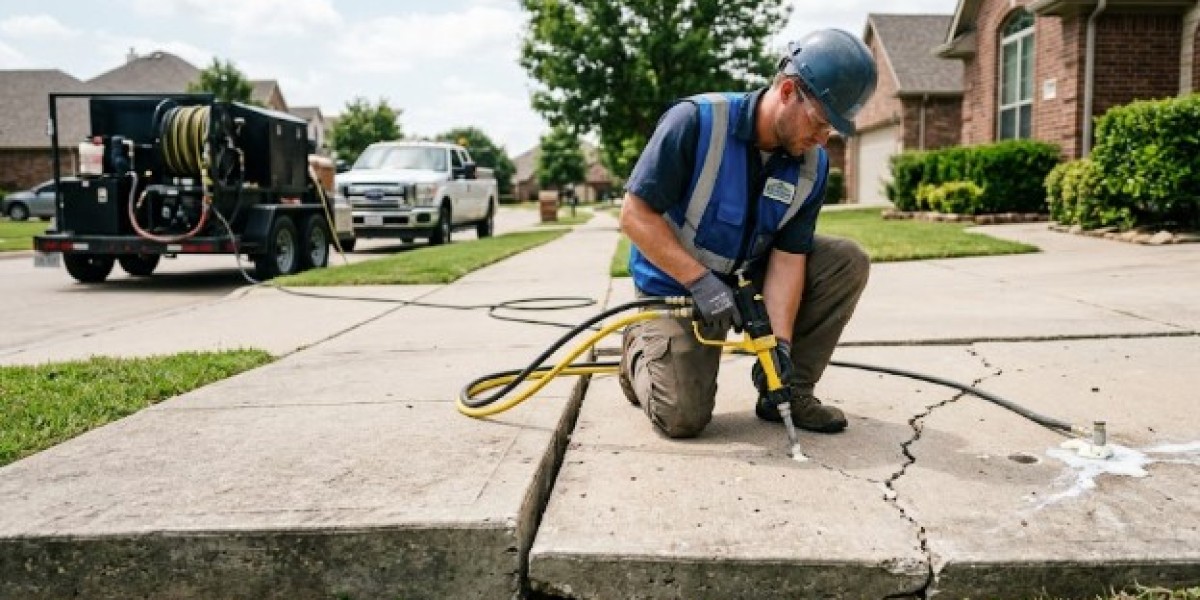

Uneven concrete around your property often points to movement in the soil beneath the slab. A sinking driveway, walkway, patio, or sidewalk can create changes in elevation that affect how you use the surface. Water also follows the lowest point, which may lead to puddling and additional soil erosion. Addressing settlement early helps maintain safer and more functional outdoor areas.
Homeowners dealing with uneven surfaces often consider concrete lifting in Marion, IA when slabs have settled but remain structurally suitable for lifting. The key question is not simply whether concrete has moved, but whether the slab is still intact enough to be raised and supported. Understanding the difference between correctable settlement and extensive deterioration can help you determine which repair approach makes sense.
What Causes Concrete Settlement?
Concrete settles when the soil supporting it moves, not because the slab itself fails. Poor compaction, erosion, drainage problems, and moisture movement can create empty spaces or reduce support beneath sections of concrete.
In Marion, seasonal temperature changes and precipitation can also affect soil conditions. Repeated freezing and thawing can contribute to movement around outdoor surfaces, including frost heave and subsequent settlement. When the underlying soil no longer provides consistent support, portions of a slab can settle at different rates.
How to Tell Whether Lifting Is Still an Option
The condition of the slab matters as much as the amount of settlement. A slab that has dropped but remains largely in one piece may be a candidate for lifting. Minor surface cracking does not automatically rule out the process, particularly when the concrete remains stable and the settlement is primarily caused by lost support beneath it.
Crack width and pattern are useful warning points. Hairline or narrow cracks may be compatible with lifting, while cracks around 1/4 inch wide or wider, multiple intersecting cracks, or sections that have separated into loose pieces deserve a closer structural assessment. There is no single crack-width cutoff that determines the repair method; the technician should also consider whether the slab remains intact and how much it has settled.
The amount of settlement matters as well. A slab that has dropped several inches can sometimes still be lifted if it remains sound and the supporting conditions can be corrected. For example, a nearly 2-inch settlement does not automatically mean replacement. The condition of the concrete and the void beneath it should be evaluated together.
Polyurethane Foam Injection vs. Mudjacking
Concrete can be raised using different injection methods. Traditional mudjacking, also called slabjacking, pumps a cement-based slurry beneath the slab through drilled openings. The material is heavier and generally requires larger holes than polyurethane foam injection.
Polyurethane foam injection uses expanding high-density foam to fill voids and raise the concrete. Tomlinson Cannon uses foam injection/polyjacking for its concrete leveling work, with installation holes listed at approximately 5/8 inch, or dime size. The company also states that the foam cures within about 30 minutes, allowing the repaired surface to return to use quickly.
The practical difference is the material placed beneath the slab. Mudjacking uses a heavier cementitious mixture, while polyurethane foam provides a lightweight alternative that expands into underlying voids. Injection ports are sealed after the lifting process so the finished surface can be used without the larger openings associated with traditional mudjacking.
How Polyurethane Concrete Lifting Works
Concrete lifting starts with an evaluation of the affected slab and the supporting ground. The technician identifies areas of settlement and determines whether lifting is appropriate for the condition of the concrete.
Small injection ports are drilled into the slab. High-density polyurethane foam is then injected beneath the concrete to fill voids and gradually raise the settled section. As the foam expands, it provides support beneath areas where soil has eroded, compacted, or otherwise moved.
Once the slab reaches the intended position, the injection ports are patched. The surrounding area is then evaluated to ensure the surface has a more consistent elevation and that drainage has improved where practical. Tomlinson Cannon identifies a cure time of approximately 30 minutes for its polyurethane foam injection process.
When Replacement Is More Appropriate
Concrete lifting is not suitable for every situation. Severely damaged concrete, extensive structural cracking, or slabs that have broken up across the surface usually require replacement.
A practical assessment should consider several factors:
- Crack width:Narrow cracks may be repairable, while cracks around 1/4 inch wide or wider should receive professional evaluation, especially when accompanied by displacement or multiple intersecting cracks.
- Amount of settlement:Significant settlement does not automatically require replacement if the slab remains intact, but larger elevation changes require careful assessment of the soil and the condition of the concrete.
- Condition of the slab:A slab that remains in one piece may be a candidate for lifting. Concrete that has fractured into multiple unstable sections is more likely to need replacement.
- Underlying support:Void fill can restore support where soil has been lost, but ongoing erosion or drainage problems should also be corrected.
- Structural damage:Extensive deterioration, broken edges, widespread cracking, or other evidence that the concrete itself has failed can make replacement more appropriate.
An inspection should consider the slab's condition, the amount of settlement, the supporting soil, drainage conditions, and the expected use of the surface. Addressing the underlying soil or water issue is also important because lifting alone does not eliminate the cause of future settlement.
Maintaining Level Concrete in Marion
After repairs, proper drainage remains important. Keep nearby gutters and downspouts directing water away from concrete and foundation areas. Avoid allowing soil erosion to develop around slab edges, and inspect surfaces after periods of heavy rain or freezing weather.
Address new cracks, drainage changes, or noticeable movement promptly. Routine observation helps you recognize developing settlement before it creates a larger safety or usability concern.
What to Consider Before Repairing Settled Concrete
A settled slab does not automatically need to be demolished and replaced. The more useful question is whether the concrete remains intact and whether the conditions beneath it can be corrected. Polyurethane foam injection can address voids and raise suitable slabs, while severely broken or extensively damaged concrete may call for replacement.
If you notice substantial settlement, widening cracks, broken sections, or drainage changes around a Marion property, a professional assessment can determine whether lifting, additional stabilization, or replacement is the appropriate next step.